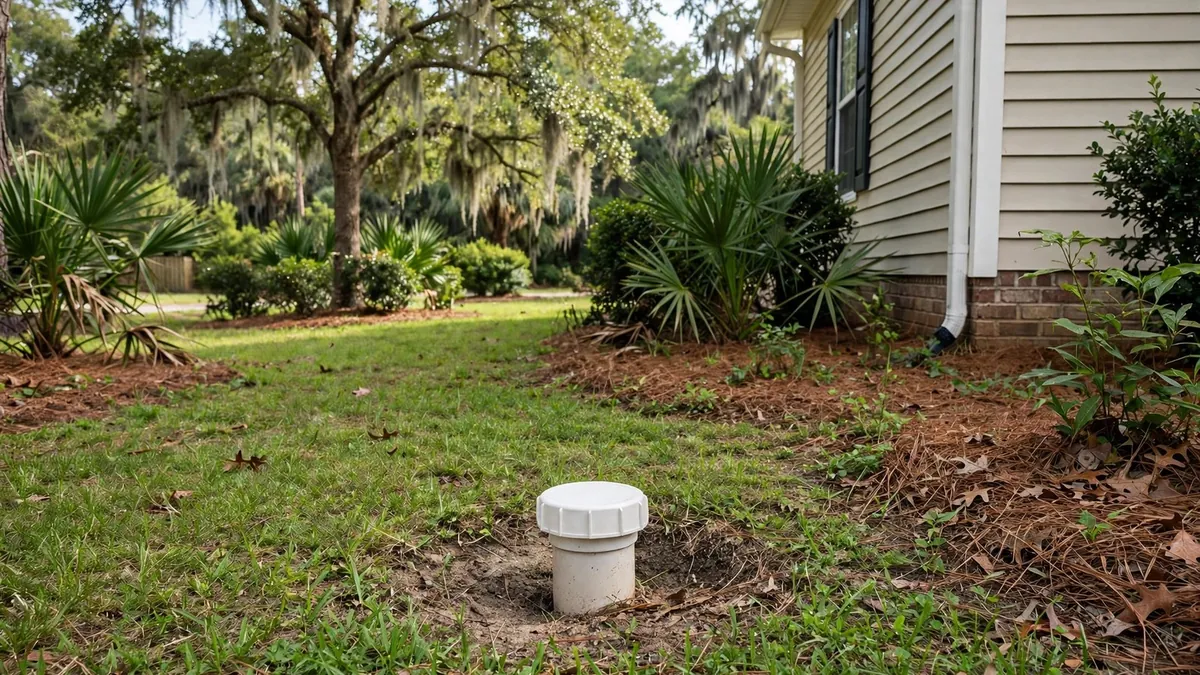
What a cleanout is
A cleanout is a capped pipe that connects to the main drain line. Removing the cap gives a technician a straight path for a cable, a jetting hose or a camera. Without one, the first step in many jobs is pulling a toilet to reach the line, which costs time and risks a damaged wax ring.
The International Plumbing Code (IPC), which South Carolina adopts with state modifications, calls for accessible cleanouts on building drains. Older houses were often built before that rule was enforced the same way, so some have none.
Where cleanouts usually hide
Check these places in order. The first one is the most common.
| Location | What to look for | Notes |
|---|---|---|
| Along the front or side of the house | A 3 or 4 inch pipe sticking up from the ground, capped | Often near where the sewer line leaves the house |
| In the yard near the street | A cap at ground level, sometimes under a small lid | Marks the property line connection |
| In the crawlspace or basement | A capped fitting on the main drain, often near the wall | Typical in houses with a lower-level drain |
| In the garage | A flush cap in the floor | Seen where the main runs under the slab |
| Near the water heater closet | A hatch or cap behind an access panel | Some builders place it there |
Sewage backing up right now?
Stop using water and call. Tell us if you have found the cleanout.
How to confirm you have found it
Not every capped pipe is a cleanout. Use these checks.
- Look at the size. Main cleanouts are usually 3 or 4 inches across. Small pipes are vents or irrigation lines.
- Check the cap. Many have a square or round nut on top, sometimes covered with dirt.
- Follow the line. The cleanout should sit roughly where the drain leaves the house toward the street.
- Open it only if you are sure. If sewage is backing up, the pipe can be full. Wait for a technician.
- Photograph and mark it. Put a flag or a paver over it so it stays easy to find.
Do not open a cleanout during a backup
If the main is blocked, the cleanout may be full of sewage. Opening it can release a flow that can spill on you and on the ground. If sewage is already coming up in the house, stop using water, keep people away from the area and call. Our guide to drain cleaning explains what technicians do from there.
If you open the cap in a calm moment, wear gloves and expect only an empty pipe. Water standing right under the cap means the line is backed up.
If your house has no cleanout
Older houses in neighborhoods such as the New Brookland blocks of West Columbia and the postwar streets of Cayce often lack an accessible one. Adding a cleanout is a small project compared with repeated toilet pulls. The plumber cuts into the main near the house, adds a fitting with a threaded cap and sets a protective box at grade.
It pays for itself the next time the line backs up, and it makes camera inspections quicker. It is also a good time to check the line, using sewer line repair if the camera finds damage.
Choosing a location when adding a cleanout
A new cleanout should sit near where the sewer leaves the house, on a straight section of pipe with room to work. A location outside is usually best, since it avoids bringing sewage into the house during a clean. The cap should be at or just above ground level, in a protective box if it is in a lawn or driveway.
A second cleanout at the property line or at a bend in a long run can save time later. A plumber reviews the layout and marks the best spot.
Sewer scopes when you buy a house
A camera inspection through the cleanout is a small cost before a large purchase.
- Ask the seller where the cleanout is. They usually know.
- Request a recorded camera inspection. The recording matters more than a verbal report.
- Watch the recording. Roots, cracks, sags and offset joints are visible.
- Ask about the pipe material and age. Clay and fiber conduit raise different questions.
- Use the findings in negotiation. A repair credit is common when a line is damaged.
A stuck or damaged cap
Cleanout caps can seize with age. Do not force one with a hammer or a pipe wrench, since a cracked fitting turns a simple access into a repair. A penetrating oil and a proper wrench help, and a plumber can cut out and replace a seized cap. If the cap is broken or missing, cover the opening and replace the cap. An open cleanout lets sewer gas and pests into your yard or crawlspace.
Keep it reachable
A cleanout that is buried under mulch or boxed in by a new deck is not accessible. Keep a clear path, trim plants around it and avoid placing heavy objects on top. If you plan a patio or a driveway, ask the contractor to bring the cleanout up to the new surface with a proper box. A quick photo with a measurement from a fixed corner of the house helps you find it again in years.
Slope, size and why they matter
Main cleanouts are usually 3 or 4 inches across, and a drain line is expected to fall at least an eighth to a quarter inch per foot so that waste keeps moving. A sag in that slope holds water, which is where solids settle and clogs begin, and a camera shows it within a minute.
Why finding it matters in the Columbia area
Mature trees, clay and cast iron laterals and aging subdivisions make main line clogs a recurring issue in the Midlands. Tree roots enter at the seams of older pipe. A visible cleanout lets you or a technician run a camera in a few minutes instead of a few hours.
Real estate buyers can ask for it too. During a home purchase in Cayce or anywhere nearby, a sewer scope through the cleanout shows cracks and roots before closing.
Sewer cleanout questions
The International Plumbing Code calls for accessible cleanouts on building drains. Older houses may predate current practice.
You can look inside. Running a cable or jet is a job for someone with the right tools and training.
It depends on depth and access. A plumber can quote it after seeing where the main sits.
A plumber can often locate the buried fitting from the pipe's path and open a small access hole. Raising it to the surface with a box makes it usable in the future.