Water Heater Installation & Replacement in Columbia, SC
Tank seams do not heal. Once rust or moisture shows at the base of the heater, the real decisions are capacity, fuel, venting and how soon the new unit can be set.
- Gas and electric
- Tank and tankless
- Price before work
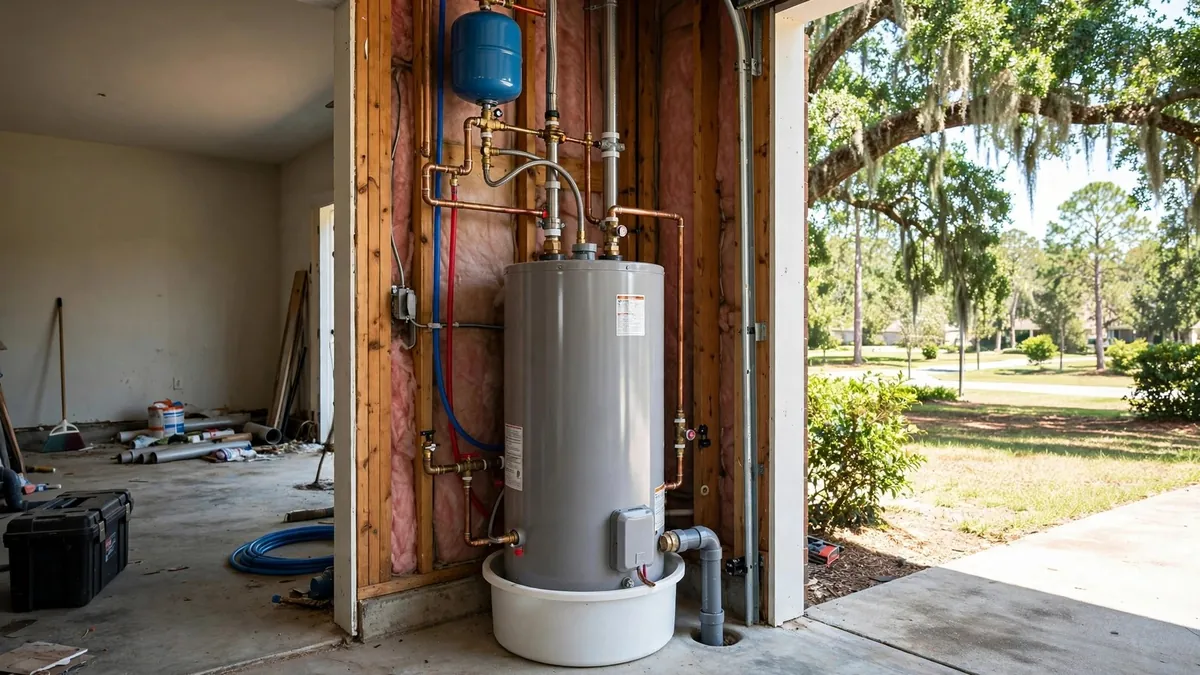
Repair or replace: a quick decision table
Use the table before you call. Repairs make sense on a young unit with one failed part. Replacement makes sense when the tank itself is failing.
| What you see | Usually a repair | Usually a replacement |
|---|---|---|
| Age of the unit | Under 8 years | 10 to 12 years or more |
| Where it leaks | A fitting, drain valve or relief valve | The tank seam or bottom |
| No hot water | A bad element, thermostat or igniter | Rust-colored water and a rumbling tank |
| Repair quote | Well under half the cost of a new unit | Near or over half |
If the table points to a repair, our page on water heater repair explains the common fixes.
Sizing a replacement for your household
Tank size follows household size and habits. A 40-gallon tank suits one or two people, 50 gallons covers a typical family of three or four, and larger households with soaking tubs often need 65 gallons or more. The first-hour rating on the yellow label matters as much as the gallon number.
Measure the closet before you shop. Federal efficiency rules in force since 2015 made many new tanks taller or wider than the 1990s model they replace, and mid-century closets in places like Forest Acres were built for smaller tanks.
Water heater down right now?
Call any hour and we will tell you whether it is a repair or a replacement.
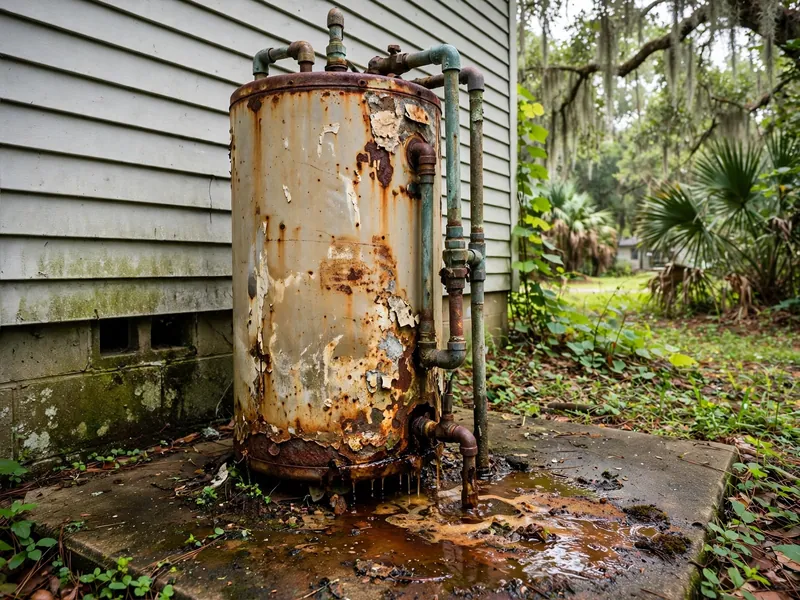 Before
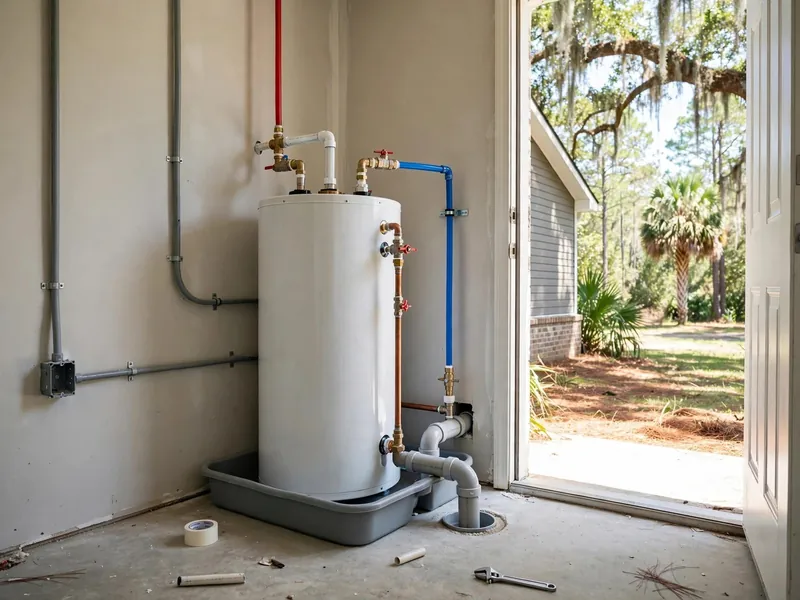 After
AfterGas, electric or heat pump: choosing the fuel
The simplest swap keeps the current fuel. Gas units need a vent, a gas connection that passes a leak test, and combustion air. Electric units need a dedicated 240-volt circuit sized for the heating elements.
Heat pump water heaters use far less electricity but need open air around them, a condensate drain and a 240-volt circuit. Incentive programs change often, so check the current rules before you count on one. For an on-demand unit, see our page on tankless water heater service.
What happens during a replacement visit
A proper install is more than swapping boxes. Expect these steps.
- Shut off and drain. Cold supply closed, power or gas off, tank drained to a safe spot.
- Inspect the connections. Corroded shutoff valves and brittle flex lines are replaced while the pipes are open.
- Set the new unit on a pan. The International Plumbing Code (IPC) calls for a drain pan where a leak could damage the building.
- Pipe the relief valve. The temperature and pressure relief valve gets a proper discharge line to a safe termination.
- Control thermal expansion. An expansion tank is added where the supply is a closed system.
- Test before leaving. Gas joints are leak-tested, venting is checked, and the unit is fired and verified.
Columbia water and your new tank
Columbia Water reports about 1 to 2 grains per gallon, so scale is a smaller threat to city customers than the internet suggests. The water is disinfected with chloramine, and low-mineral water can be hard on the sacrificial anode rod inside the tank. Ask for the anode to be checked or replaced every few years to extend the tank's life.
Homes in Cayce and West Columbia are on their own city systems, and a Lexington home may be on yet another supply, so ask your utility for its hardness figure before choosing treatment equipment.
Warning signs a tank is close to failing
Catching these early lets you replace on your schedule, not at midnight.
Rust-colored hot water
If only the hot side runs brown, the tank interior or the anode is corroding.
Moisture or rust at the base
A weeping seam is the point of no return for a steel tank.
Rumbling or popping
Sediment hardens on the bottom, strains the tank and wastes energy.
A unit past its twelfth year
Even a quiet tank this old is borrowing time. Plan the replacement.
Planning the swap so you are never without hot water
A planned replacement goes quicker than an emergency one. Clear the area around the heater, locate the cold water shutoff and tell us the model number. We can usually line up the new unit before the old one is drained, and a like-for-like swap often finishes in one visit.
Ask what happens to the old tank. Disposal and scrap pickup should be in the quote, not a surprise at the end.
Efficiency labels and operating cost
The Uniform Energy Factor, or UEF, is the efficiency rating on the yellow label. A higher number means less energy per gallon of hot water. Compare UEF within the same type and size, because a gas tank and an electric heat pump are measured differently.
The label also estimates yearly energy cost. Treat it as a comparison tool, not a promise. A household that showers a lot or runs a recirculation pump will see different numbers.
Installation mistakes to avoid
Ask about each of these when comparing quotes.
- Reusing old flex lines or corroded valves. Fresh connectors cost little and prevent a repeat visit.
- Skipping the drain pan or expansion tank. Both are called for where a leak could cause damage or the supply is a closed system.
- Undersized or poorly sloped vent pipe. Gas units must vent exhaust gases safely outside.
- An unpiped relief valve. The discharge line must end in a safe spot, not a dead end.
Permits and garages around Richland and Lexington counties
Richland County and Lexington County, and the cities inside them, each run their own building offices, so ask yours whether a heater swap needs a permit before the install date. Houses near Lake Murray often keep the heater in a garage, where the International Fuel Gas Code sets the burner at least 18 inches above the floor. Columbia Water customers can also ask the utility for its hardness figure before sizing treatment.
Expansion tanks, venting and the permit
A water system with a pressure-reducing valve or backflow preventer is closed, so heated water has nowhere to expand and pressure climbs. An expansion tank on the cold line absorbs that growth, and many installations require one.
Gas heaters also need a correct vent and a sediment trap on the gas line, and the old tank has to be hauled away. Ask your city or county building office whether a permit applies before the install date.
Tight closets, garages and attics around the city
Shandon grew from the 1890s along an electric streetcar line, and its Craftsman bungalows and American Foursquares were built mostly in the first half of the 1900s. Nobody planned a 50-gallon tank for those houses, so heaters tend to sit in a closet, a corner of the basement or the attic. Access, venting and a drain pan decide how long a replacement takes.
Out in Northeast Columbia and Blythewood, the usual setup is a garage tank on a slab, which makes the swap simpler. Tell us the age of the old unit and the size of your household before you choose a new tank.
What decides the price of a water heater replacement
Two homes with the same tank size can price very differently. These are the real drivers.
Insurance usually does not pay to replace a unit that simply wore out. It may help if a sudden rupture damaged the home. Read the manufacturer warranty too, because tank warranties often cover the tank but not labor.
Want your real number? Call (844) 981-1691 and mention fuel and venting and tank size or type.
Water heater work that often goes together
If the old unit leaked onto a floor, ask about water damage restoration before the subfloor stays wet. A gas heater swap sometimes uncovers an undersized supply, which is where gas line repair and installation comes in. Newer subdivisions in Lexington are where many first-generation tanks are now due.
Water heater replacement questions
A like-for-like swap often takes a few hours. Moving to a different fuel, adding venting or switching to tankless can take most of a day.
If the tank is under about eight years old and still sound, a fresh anode can add years. If the tank is already leaking, an anode will not save it.
Yes, but it needs a 240-volt circuit and may need panel capacity. We check the panel on the first visit and tell you the real cost.
The warranty usually covers the failed tank or part, not labor. Find the model and serial number on the label before you call.