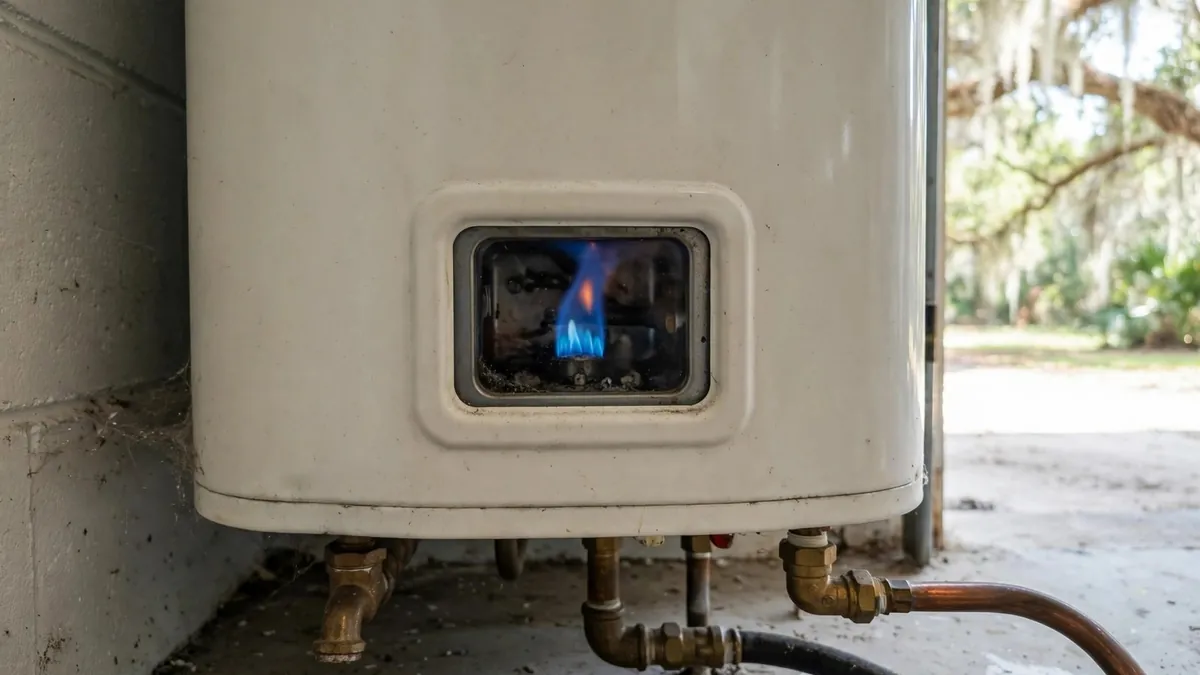
What to do first: a safety check before you touch the pilot
If you smell gas, do not try to relight anything. Leave the house, call 911 and call your gas provider. Dominion Energy South Carolina takes gas leak calls at 800-815-0083. If another company supplies your gas, use the number on your bill.
Also stop if the heater is sooty, if the flame is yellow and floppy instead of blue, or if the flue looks disconnected. Those are venting and combustion problems, and they can produce carbon monoxide. A carbon monoxide detector on each level is a separate layer of protection.
Why a pilot goes out
Most pilot problems come from a handful of parts. Match the symptom.
| What you see | Likely cause | Typical fix |
|---|---|---|
| Lights while you hold the button, dies when you let go | Worn or dirty thermocouple or thermopile | Clean or replace the part |
| Lights, burns for hours, then dies | Draft, dirty pilot orifice or weak gas pressure | Clean the assembly, check airflow and gas supply |
| Will not light at all | Blocked pilot tube or a failed gas control valve | Clean the tube, replace the valve if needed |
| Goes out on windy days | Downdraft in the flue or poor combustion air | Fix the vent or air supply |
| Goes out after a power or gas interruption | Normal relight needed | Relight following the label |
Pilot out and no hot water?
Call and tell us the brand and age on the label.
How a thermocouple works, in plain terms
A thermocouple is a small metal probe that sits in the pilot flame. It makes a tiny electric current that tells the gas valve the flame is on. If the probe is dirty, bent or worn out, the valve closes and the flame dies. That is why holding the button works and releasing it does not.
They are inexpensive parts, and replacing one is a quick job for a technician. Some newer heaters use an electronic igniter and a flame sensor instead, with similar logic and a different part.
A careful relighting routine
The label on your heater has the exact steps for your model. This is the general sequence.
- Turn the gas control to off and wait. Give any gas five minutes to clear.
- Sniff low and high. Natural gas rises and propane settles near the floor. If you smell either, stop and leave.
- Set the control to pilot. Press and hold the button while you light the pilot as the label shows.
- Hold for about a minute. This lets the thermocouple heat up.
- Release slowly and turn to on. If the flame stays lit, set the temperature.
- If it goes out again, stop. Repeated tries will not fix a failed part.
Drafts, vents and combustion air
Modern houses are tight, and a bathroom fan, dryer or range hood can pull air down the heater's flue and blow the pilot out. A water heater in a closet needs a path for combustion air. If your pilot goes out when a fan runs, that is a clue. Ask a technician to check the vent and the room's air supply.
Newer subdivisions in Lexington often place the heater in a garage or a utility closet, and each setup has its own air and vent needs.
Standing pilot or electronic ignition
Not every gas heater has a pilot flame that burns all the time. Check which you have.
| Type | How it lights | Typical failure |
|---|---|---|
| Standing pilot | A small flame stays lit all the time | Thermocouple, dirty pilot, drafts |
| Electronic ignition | A spark lights the burner on demand | Igniter, flame sensor, control board |
| Direct vent with electronic control | A sealed system draws air from outside | Blower, pressure switch, vent blockage |
What a technician checks on a pilot call
The technician starts with safety. They test for gas at the connections and check the flue for backdrafting and soot. Then they test the thermocouple's output with a meter, inspect and clean the pilot assembly and measure gas pressure at the valve. Each of these steps eliminates a possible cause.
They also look at the tank condition and the age, which helps you decide whether to repair or replace. A new thermocouple on a twelve-year-old tank is a reasonable fix if everything else looks good.
Carbon monoxide: the part that should not wait
Carbon monoxide has no smell and no color. Gas appliances that burn poorly produce it, and it can build up in a closed space. Symptoms of exposure include headache, dizziness and nausea. If a detector alarms or several people feel ill at once, leave and call 911.
Replace detector batteries on schedule, and replace the units themselves when the manufacturer says, often after five to ten years. A detector is inexpensive protection for any home with a gas appliance.
Safe habits around a gas water heater
A few routines prevent most problems and make the others easier to catch.
- Keep the area clear. Do not store paint, gasoline or other flammable products near the heater.
- Raise the burner in a garage. The International Fuel Gas Code (IFGC) calls for the ignition source to sit at least 18 inches above the floor in garages.
- Flush the tank occasionally. Sediment hurts efficiency and noise.
- Set the temperature sensibly. About 120 degrees limits scalding.
- Test your carbon monoxide detector. Do it monthly.
When it is time for a replacement
A pilot problem on a tank older than about ten to twelve years is a good moment to ask whether repair or replacement makes more sense. A replacement also brings the relief valve discharge piping up to the International Plumbing Code (IPC). If the tank shows rust, moisture at the base or a rumbling noise, the tank itself may be near the end. Our pages on water heater repair and water heater replacement explain each path.
Pilot light questions
It can be, because unburned gas may collect. If you smell gas, leave and call 911 and your gas provider.
People do. The risk is leaving a gas connection loose. A technician tests the work with a leak detector.
Downdrafts in the flue or a blocked vent cap can blow it out. The vent needs inspection.
On a standing pilot model, an outage does not usually affect it, though a gas interruption can blow it out. Electronic ignition models relight on their own once power returns. If you smell gas, do not try anything and leave.
Often several years, but they wear out sooner with dirt, drafts or heat. A replacement is inexpensive compared with the cost of repeated service calls.