Water Filtration Installation in Columbia, SC
Columbia Water disinfects with chloramine, and standard carbon filters handle it poorly. The media you choose matters more than the brand on the housing.
- Whole-home and point-of-use
- Chloramine-rated media
- Filter change plans
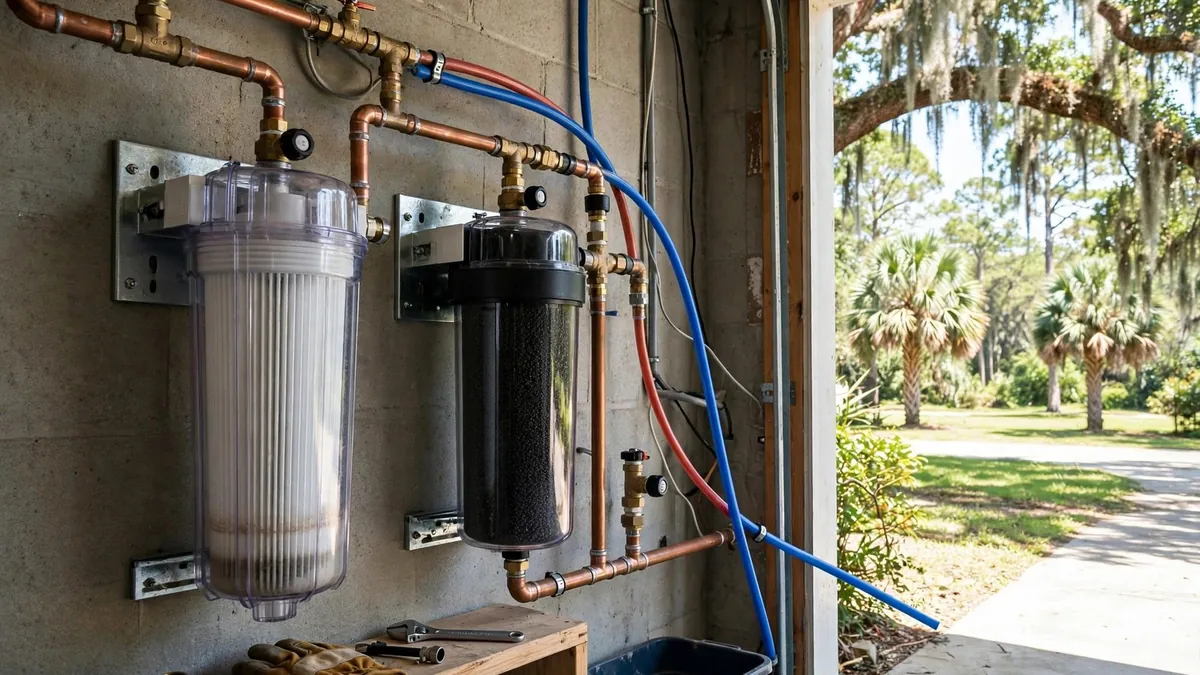
Why chloramine changes the filter you need
Columbia Water has used chloramine as a disinfectant at its Canal plant since the mid-1960s and at its Lake Murray plant since 1982. Chloramine is more stable than chlorine, so it does not simply flash off in a basic carbon filter.
Catalytic carbon or a longer contact time is what removes it. A filter sold only as a chlorine filter may do little for chloramine taste, and the replacement schedule matters just as much.
Which filter fits which problem
Match the complaint to the equipment before you buy.
| What you notice | Likely cause | Equipment to consider |
|---|---|---|
| Chemical or pool taste | Chloramine or chlorine | Catalytic carbon, whole-home or under-sink |
| Sand or particles | Sediment in lines or a main disturbance | Sediment pre-filter |
| Brown or red staining | Iron or corroding old pipe | Fix the pipe first, then filter if needed |
| Rotten-egg smell | Often a water heater anode reaction | Check the heater before treating the water |
Want better-tasting tap water?
Call and tell us what you taste or smell. We will point you to the right media.
A filter is not a boil-water fix
During the October 2015 flood the Columbia Canal breached and the city issued a boil-water advisory. A standard carbon filter does not make unsafe water safe. Follow the advisory and boil, or use a filter certified for the contaminant named.
Filters also need maintenance. A spent filter stops working, and a neglected one can hold bacteria. Write the change date on the housing.
Whole-home or under-sink?
A whole-home system treats every tap, including shower water, and suits a household that dislikes the chloramine smell in a hot bath. An under-sink filter treats the drinking and cooking tap for a fraction of the cost and is easier to service.
Many homes do best with both a whole-home sediment stage and an under-sink carbon filter. We size the system to your flow rate so pressure stays steady.
Read the certification before you buy
Independent standards tell you what a filter is actually tested to do.
| Standard | What it covers | Look for it when |
|---|---|---|
| NSF/ANSI 42 | Aesthetic effects such as chlorine and chloramine taste and odor | Taste and smell are the complaint |
| NSF/ANSI 53 | Health effects such as certain metals and cysts | A specific contaminant is the concern |
| NSF/ANSI 58 | Reverse osmosis drinking water systems | You want a drinking-water polish |
Filter cartridges: change them on schedule
A filter has a rated capacity in gallons or months. Past that, it stops removing what it was built to remove. Set a calendar reminder when you install it, write the date on the housing and keep a spare set. A system you forget to maintain is worse than none, because you assume it is protecting you.
Read your utility's water quality report first
Columbia Water publishes an annual water quality report, also called a consumer confidence report. It lists what the utility found in treated water and compares it with federal limits. Read it before you buy a filter, so the equipment you choose answers something the report or your own tap actually shows.
If you are on another city's system, or on a private well, the same logic applies. Ask for the report or order a lab test, and match the filter to the result.
Reading Columbia Water's report before you buy
Columbia Water draws from the Broad River Diversion Canal and Lake Murray and publishes an annual water quality report. Use it to see the chloramine range before choosing media. In Lexington County, a water system or a well may have no report at all, which makes a lab test the right first step.
Filtration choices from Lake Murray to Lower Richland
Houses around Chapin get most of their water from the City of Columbia system, which treats with chloramine, so a carbon filter is the usual choice for taste. Blythewood's water comes from Winnsboro, so check that supplier's report before you pick equipment.
Well owners in Lower Richland need a test first, because sediment, iron and bacteria each call for a different system.
What changes the price of a filtration system
Equipment choices drive most of the cost.
Insurance does not cover filtration equipment. Ask for the yearly filter cost up front.
Want your real number? Call (844) 981-1691 and mention system type and media and stages.
Related water-quality help
If your water is actually hard, our page on softener installation and repair covers the test first. Homes served by Cayce's own water system should read the Cayce page for how that utility's reports work. A hot-water complaint that looks like a water quality issue can also be a heater problem, covered on water heater repair.
Water filtration questions
Not well. Catalytic carbon or a longer contact time is needed. Check the filter's published chloramine rating.
A correctly sized one should not noticeably. An undersized or clogged one will. We size it to your flow rate.
It depends on the media and your usage. Follow the maker's schedule, and write the date on the housing.
Only with a filter certified for the contaminant named. Otherwise boil the water as the advisory says.