What happened, in brief
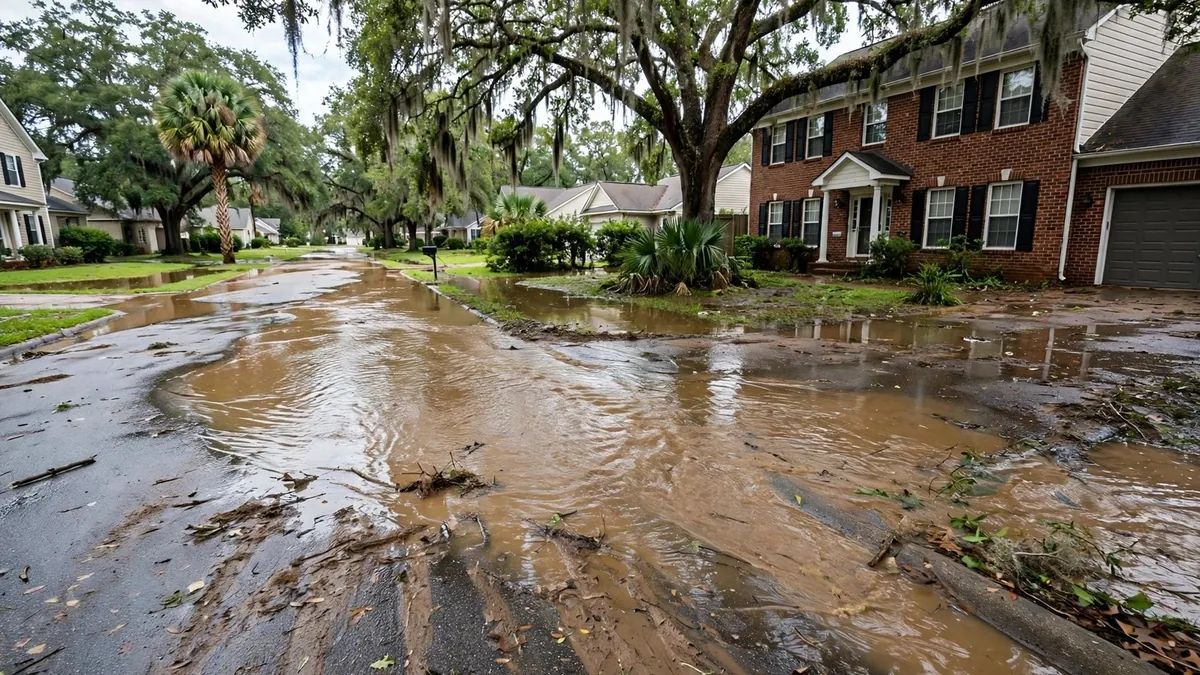
From October 1 to 5, 2015, a stalled front and tropical moisture dropped record rain on central South Carolina. A rain gauge on Gills Creek in Forest Acres logged more than 16 inches by midnight, and about 10 inches fell there in a four-hour stretch. At least four dams in the Gills Creek watershed failed, and the Congaree River crested at 31.8 feet in Columbia.
The Columbia Canal, which feeds the city's drinking water supply, breached. The city lost water pressure, two downtown hospitals needed water delivered, and residents were told to boil water until the system was shored up and tested. The National Guard helped stabilize the breach.
Lesson one: the shutoff you cannot find is the one you need
In emergencies, minutes matter and nobody wants to search the yard with a flashlight. Locate your main shutoff, label it and make sure everyone old enough to help can operate it. If your meter box has a curb stop, learn where the tool is kept.
Know where the electrical panel and the gas shutoff are too. A flooded house is a hazard, and shutting off utilities when it is safe to do so protects both people and equipment.
Worried about the next big storm?
Call and we can test your sump pump, shutoffs and backwater protection.
Lesson two: ground water arrives before the river does
Homes near Gills Creek, Rocky Branch and the Congaree learned that saturated ground pushes water into crawlspaces, sump pits and sewer lines well before a river crests. A pump with a battery backup and a discharge line that carries water away from the foundation is the first defense. Our page on sump pump installation and repair explains the parts.
Backups happen at the lowest drain in the house, often a basement or ground-floor tub. A backwater valve on the building drain is the standard protection for that.
A pre-storm checklist drawn from 2015
Run through this when the forecast calls for several inches of rain.
- Test the sump pump and the backup. Pour in a bucket of water and confirm the pump and its battery both start.
- Clear gutters and downspouts. Make sure roof water leaves the foundation area.
- Raise what you can. Lift stored items, the washer and dryer controls and any electronics off low floors.
- Fill clean containers. Keep drinking water on hand in case of a boil advisory.
- Photograph the house. Dated before-photos make a claim much easier.
- Charge phones and know your shutoffs. Power outages arrive with the water.
Floodwater is not clean water
Water that comes from outside carries sewage and soil. Industry guidance classes it as the most contaminated category, and porous materials that sat in it are usually discarded. Do not use fixtures that drain to a damaged line until a plumber has checked it, because a cracked or flooded sewer will push waste back into the house.
After a flood, ask for a camera look at the sewer lateral. The cost is small next to repeating a cleanup. Our guide to sewer line repair explains what a camera shows.
Insurance: the lesson people learned too late
Standard homeowners policies generally exclude flood damage. Flood insurance is a separate policy, and policies sold through the national program usually carry a waiting period before coverage starts, often 30 days. Check your policy now, not when the radar looks bad.
Sewer backup and sump failure often need an endorsement. Ask your agent which of these your policy includes, and keep the answer in writing.
Before you turn the water back on
After a flood, go slowly. These steps prevent a second round of damage.
- Check for a boil advisory. Follow the utility's instructions before you drink the water.
- Inspect visible pipes. Look for cracks, shifted fittings and signs that debris struck a line.
- Open the main slowly. Watch the meter and listen for running water.
- Look for wet spots. New leaks often appear when pressure returns.
- Have the sewer scoped. Silt and shifting soil can crush or block the line.
Rebuilding with upgrades in mind
If a flood forces repairs, use the opportunity to improve resilience. Raise the water heater and its controls on a platform. Add a backwater valve and a sewer cleanout. Place electrical outlets above the expected waterline. These upgrades cost less during a rebuild than as a separate project.
Ask your building department about elevation rules for repairs in a flood zone, since substantial improvements can trigger requirements. Rules vary by jurisdiction and by how much of the home is affected.
Know your flood map
The Federal Emergency Management Agency publishes flood maps through its Map Service Center, and your county's emergency management or planning office can help you read them. Look up your address and note the zone. A home outside the mapped floodplain can still flood, as the 2015 event showed in several Columbia neighborhoods.
Keep a household plumbing file
After a disaster, the person who can say where everything is and what it cost recovers faster. Keep a folder, paper and digital, with a sketch of the shutoffs, photos of the water heater label and the meter, receipts for plumbing work and the policy numbers for your homeowners and flood coverage. Update it when something changes.
Where your area stands
Every part of the Midlands has a different flood profile. Forest Acres sits in the Gills Creek story, while low parts of Cayce flood when the Congaree reaches certain stages. Check the flood maps for your address, then match your protection to the actual risk.
Flood preparation questions
If your lowest drain sits below the next manhole upstream, it is worth asking about. A plumber can check the elevations.
It handles ground water that reaches the pit. It cannot stop river water from entering a house when levels rise high enough.
Wait until a plumber has checked the supply and the sewer. Follow any boil advisory from the utility.
If you evacuate and it is safe to reach the valve, closing the main limits damage from broken lines. Follow official evacuation orders first and never wade through moving water to reach a shutoff.
Planners suggest about a gallon of water per person per day for several days, a flashlight, a battery radio, a first-aid kit and copies of key documents. Add a wrench for the main valve.