What the smell actually is
Sewer gas is a mix of gases produced as waste breaks down. Hydrogen sulfide gives it the rotten-egg odor, and methane is odorless but flammable. The International Plumbing Code (IPC) requires every fixture to have a trap and a vent for exactly this reason: the water-filled trap and the vent system keep this gas out of the house.
A smell means that barrier has failed somewhere. Low levels are mainly a nuisance, but high levels can be hazardous, so a strong or persistent odor deserves attention. If you feel ill or smell gas strongly, leave and call for help.
Six causes, in order of how easy they are to check
Start at the top and work down. Most smells are solved in the first three rows.
| Cause | Where you smell it | How to check |
|---|---|---|
| A dry P-trap | Rarely used sink, tub or floor drain | Run water for a minute and see if the smell fades |
| A blocked plumbing vent | Gurgling drains, smell near the fixture | Look for a bird nest or debris at the roof vent |
| A failed toilet wax ring | Around the base of one toilet | Check for movement or moisture at the floor |
| A loose or missing cleanout cap | Garage, crawlspace or yard near the house | Look for a cap that is missing or cracked |
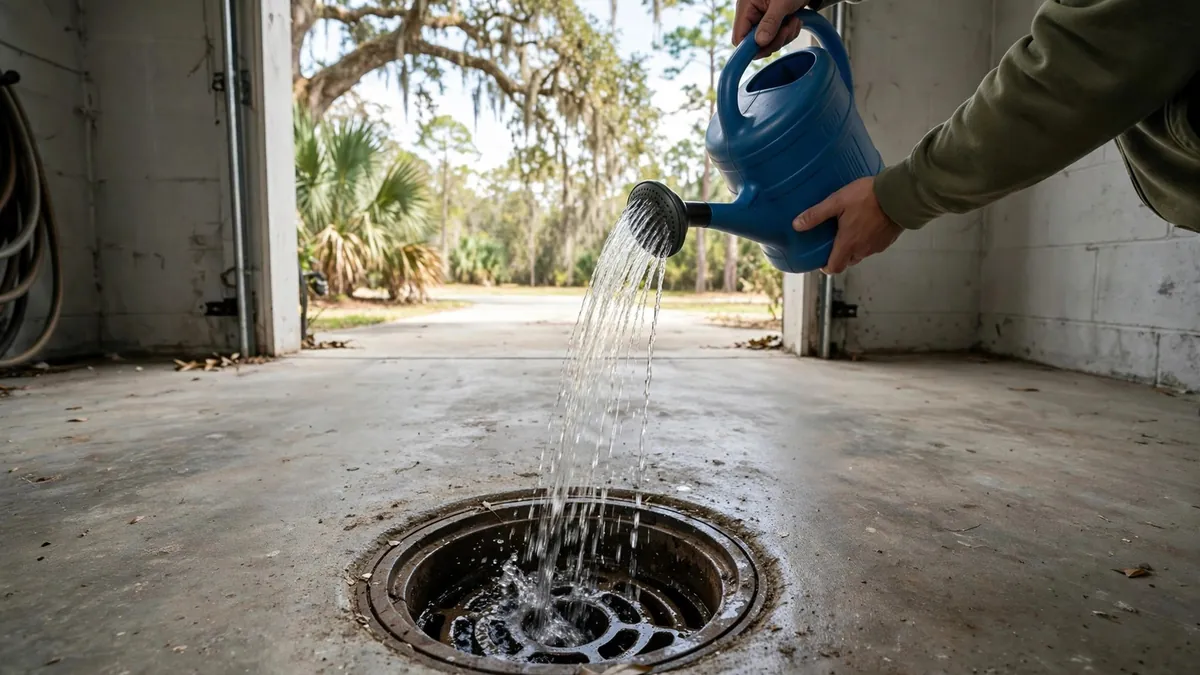
| A dry or damaged floor drain trap | Basement or utility room | Pour water in and watch if it drains slowly |
| A cracked or broken drain line | Spread through a room or crawlspace | Needs a camera inspection |
Strong sewer smell that won't go away?
Open windows and call. A persistent smell needs a plumber.
Test the easy ones first
These steps take about ten minutes.
- Run water in every drain. Include the guest bath, the laundry and any floor drain. Let each run for a minute.
- Smell each fixture. A smell that follows one fixture points to that trap or seal.
- Check the toilet bases. Look for dampness or a rocking bowl.
- Look at outdoor and crawlspace caps. A missing cap lets gas escape.
- Check the roof vents. Ask someone to look from a ladder, or use binoculars.
Why the smell comes back
A trap that dries out once will dry out again. In a seldom-used bathroom, a little water poured in monthly keeps the seal, or a few drops of mineral oil on top slow evaporation. Floor drains in utility rooms are the most common repeat offenders.
If the smell returns after you refill the trap, the cause is elsewhere, and a plumber should check the vent and the drain line. Our page on drain cleaning explains how a camera finds blockages and buildup.
When the smell points to the sewer line
A smell in the yard or crawlspace that gets stronger after rain, damp patches over the line or a basement smell that spreads suggest a leak in the main. Roots, cracked clay or broken cast iron are the usual causes. A camera inspection finds the damage. Our page on sewer line repair covers what a repair involves.
Older sections of West Columbia, where mill-era houses sit on aging lines, are one example of where this shows up, and you can read more at West Columbia.
Which fixture is it? A quick sorting guide
The location of the smell narrows the cause.
| Where it smells | Most likely source | First step |
|---|---|---|
| Kitchen sink | Dry or dirty trap, disposal buildup | Run hot water, clean the disposal |
| Bathroom floor | Wax ring or floor drain | Check the toilet base and the drain |
| Laundry room | Standpipe or floor drain trap dry | Pour water down the standpipe |
| Basement or crawlspace | Dry trap, cracked pipe, loose cap | Inspect caps and traps |
| Whole house | Main line or vent problem | Camera inspection |
Smells from the disposal and the dishwasher
A garbage disposal holds food waste, and a splash guard collects grime. Grind ice and a lemon peel, and scrub under the rubber flaps. A dishwasher can smell like sewage if its drain loop is wrong or its filter is dirty. Clean the filter and run a hot cycle.
If the smell stays after cleaning, the problem may be in the kitchen drain line, which a plumber can inspect with a camera. See garbage disposal repair for the disposal side.
Staying safe around sewer gas
Hydrogen sulfide is toxic at high concentrations, and methane is flammable. In a house, the levels are usually low, but do not tolerate a strong or lasting smell. Ventilate, avoid open flames and call a plumber. If you smell natural gas, which has an added rotten-egg odor, leave and call 911 and your gas provider. Dominion Energy South Carolina takes leak reports at 800-815-0083.
A sewer smell with symptoms like headache or nausea calls for fresh air and medical advice, not a wait-and-see approach.
What a plumber does to find a smell you cannot trace
When the easy checks fail, there are methods built for the job.
| Method | How it works | What it finds |
|---|---|---|
| Smoke test | Harmless smoke is blown into the drain system | Cracks, missing caps and vent leaks, where smoke escapes |
| Camera inspection | A camera travels through the drain line | Breaks, sags, roots and buildup |
| Dye test | Colored water is flushed through a fixture | Where a hidden leak surfaces |
| Pressure and vent check | Air is used to test the system | Blocked or leaking vents |
Toilets, wax rings and sealing the floor
A toilet that smells at the base may have a failed wax ring. Water or gas escapes at the seal, and the smell often comes with a damp floor. Do not ignore it, since a leak can rot the subfloor. Replacing the ring and checking the flange is a short job. See toilet repair for how it is done.
Sewer odor questions
At low levels it is mostly unpleasant. At higher levels it can be hazardous. If the smell is strong, ventilate and call.
A fan can pull gas through a dry trap. Refill the trap and check the vents.
Yes. Vents release gas outdoors by design, and a downdraft can bring it back near windows.
Yes. Traps may be dry in unused bathrooms, vents may be unfinished or a fitting may not be fully sealed. A plumber can check the vents and traps and run a smoke test if the cause is not obvious.
Heavy rain can raise pressure in the sewer system, push gas through a dry trap or reveal a cracked line. If the smell is strongest after storms, a camera inspection and a look at your traps and vents is the next step.