Toilet Repair & Installation in Columbia, SC
Rocking bowls, ghost flushes and puddles at the base trace back to a handful of parts: the flapper, the fill valve, the wax ring and the flange bolts.
- Running and leaking toilets
- Wax ring replacement
- New toilet installs
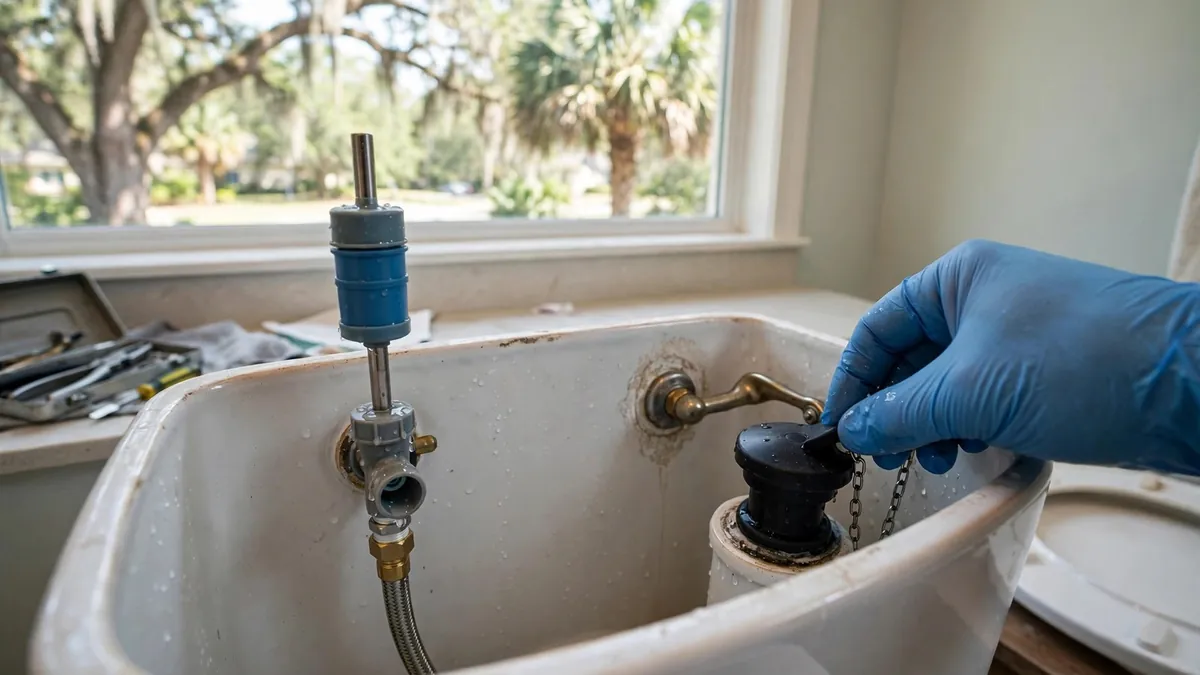
Is your toilet running? A two-minute dye test
A silent leak in the tank can waste a lot of water. This test finds it.
- Add food coloring to the tank. Use a few drops and do not flush.
- Wait fifteen minutes. Leave the toilet alone.
- Look in the bowl. Color in the bowl means the flapper is leaking into it.
- Listen to the fill valve. If it keeps hissing after the tank is full, the fill valve or float needs adjustment.
Symptom, cause and fix
Most toilet problems fall into a few patterns.
| Symptom | Likely cause | Typical fix |
|---|---|---|
| Runs on and off | Worn flapper or chain | Replace the flapper |
| Hisses or fills slowly | Failing fill valve | Replace the fill valve |
| Water around the base | Failed wax ring or loose bolts | Reset the toilet with a new wax ring |
| Rocks when you sit | Uneven floor or loose flange | Shim, tighten or repair the flange |
| Weak flush | Clogged rim jets or low water level | Clean jets and reset the water level |
Toilet overflowing or leaking?
Close the supply valve behind the toilet and call.
Why flappers fail early in some Columbia homes
Columbia Water has used chloramine since the mid-1960s at its Canal plant and since 1982 at its Lake Murray plant. Chloramine can degrade some rubber and plastic parts faster than chlorine alone. A flapper that goes soft or sticky after a year or two is a common sign.
Ask for a chloramine-resistant flapper. It costs about the same and lasts longer. Homes in Cayce and West Columbia are on their own utilities, so ask yours what it uses.
Wax rings and rocking toilets
The wax ring seals the toilet to the drain flange. A failed ring leaks at the base and can rot the subfloor over time. Replacing it means lifting the toilet, checking the flange and setting the toilet again with new bolts.
A toilet that rocks may have a flange set below the finished floor after tile was installed. A flange spacer or repair fixes it. Do not just caulk around a rocking toilet.
Replacing a toilet
Measure the rough-in, the distance from the wall to the drain center. Twelve inches is common, though older houses vary. Federal rules have limited new toilets to 1.6 gallons per flush since 1994, and WaterSense models use 1.28 gallons or less.
The International Plumbing Code (IPC) calls for at least 15 inches from the toilet centerline to a side wall or fixture and 21 inches of clear space in front. A chair-height bowl is easier on knees, and a one-piece toilet is simpler to clean. If a toilet clogs repeatedly, check the drain line before blaming the fixture.
A clogged toilet: what to try before you call
Most single-toilet clogs clear with the right tool.
- Use a flange plunger. A cup plunger does little on a toilet. The flange type seals the bowl outlet.
- Use a closet auger. It reaches a few feet into the trap without scratching the porcelain.
- Avoid chemicals. They can damage the bowl and are dangerous if the line is opened.
- If it keeps recurring, check the main. Several clogged fixtures point to the main line, not the toilet.
What a Columbia Water toilet repair usually involves
Columbia Water has used chloramine since the mid-1960s, and chloramine is a known contributor to soft, sticky flappers. Homes in Richland County and Lexington County follow the same plumbing code, the International Plumbing Code with South Carolina changes, so a replacement toilet needs the same 15 inches of side clearance from the centerline whether you live in Forest Acres or near the Congaree.
Running, rocking, leaking or weak: what each symptom means
A toilet that runs or refills on its own usually has a worn flapper or a fill valve that no longer shuts off. One that rocks has loose closet bolts or a failed wax ring. Water around the base points to the same wax ring or to a cracked flange.
A weak flush is often mineral buildup in the rim jets or a water level set too low in the tank. Sweating on the outside of the tank is condensation and not a leak. Naming the symptom when you call helps the technician bring the right parts.
The wax ring, the flange and the floor underneath
A wax ring seals the toilet to the drain. When it fails, water can seep under the bowl for months before you see it. Pulling the toilet shows the condition of the closet flange and the subfloor, and a soft or stained floor around the base means the leak has been going on for a while.
A flange that sits below the finished floor needs a spacer or repair ring to seal, and a cracked one needs replacing. Most toilets use a 12-inch rough-in, so measure from the wall to the bolts before buying a new bowl.
Water use and when to replace instead of repair
Federal rules have limited new toilets to 1.6 gallons per flush since 1994, and EPA WaterSense models use 1.28 gallons or less. Older toilets can use far more, so a pre-1994 bowl that keeps needing parts is a reasonable one to replace.
A running toilet can also waste a surprising amount before it shows on the bill. If repairs do not stop a rising bill, a silent leak elsewhere is possible, and leak detection separates the toilet from the rest of the house. Repeat clogs on several fixtures point to the main drain, which drain cleaning clears.
Installing a new toilet: what the job includes
A replacement starts with shutting the supply, draining the old bowl and removing it from the flange. The technician inspects the flange and floor, sets a new wax ring or gasket, and tightens the bolts evenly so the bowl does not crack. A new supply line and shutoff valve are usually included.
Height, bowl shape and rough-in all matter. A comfort-height bowl sits taller, an elongated bowl needs more room, and the code calls for 15 inches from the centerline to a side wall or fixture. Check those measurements before you buy.
Small parts you can check before you call
Lift the tank lid and look. A flapper that sits crooked, a chain that is too tight or too loose, and a float set too high are common causes of a running toilet and need only an adjustment. A dye tablet in the tank shows a leaking flapper if color reaches the bowl without flushing.
Turn off the shutoff valve under the tank and flush if the toilet will not stop running, so water does not keep draining while you wait for the visit. Do not force corroded valves, as they can snap and flood the bathroom.
Clogs and what they mean
A single clogged toilet is usually a local blockage and a plunger or closet auger clears it. If the tub gurgles or the bowl backs up when other fixtures drain, the main line is involved. Repeated clogs in a toilet with a strong flush can mean an obstruction in the trap or a sag in the drain line.
Avoid chemical drain openers in a toilet, since they can burn skin and damage the bowl and the pipe. Flushable wipes and paper towels are among the most frequent causes of clogs.
Toilet repairs in older bungalows and new construction
Floors in Shandon and Earlewood bungalows are often original wood over a crawlspace, so a failed wax ring can soak the subfloor quietly for months. Pulling the toilet shows whether the floor or the flange needs work.
In newer homes in Blythewood and Northeast Columbia the usual call is a worn fill valve or a flapper, a quick fix on a slab floor.
What changes the price of toilet work
A flapper swap and a toilet replacement are very different jobs.
Insurance does not cover wear. A sudden supply line failure that floods a room may be covered.
Want your real number? Call (844) 981-1691 and mention repair or replacement and flange condition.
When a toilet problem points elsewhere
A toilet that runs for hours can raise a bill, which is a reason to try leak detection if the dye test is clear. A leaking base that has soaked the floor may need water damage restoration.
Toilet repair questions
A flapper that does not seal lets water leak slowly into the bowl until the fill valve refills the tank.
Many people do. The risk is a damaged flange or a bad seat, which leaks again.
Porcelain lasts decades. The working parts inside usually need replacement every few years.
Close the supply valve and avoid flushing. It can damage the floor if left.