Emergency Water Damage Restoration in Columbia, SC
Saturated drywall, swollen baseboards and a musty smell call for the full sequence: extraction, drying, moisture mapping and rebuild. Speed in the first day shapes everything after it.
- 24/7 emergency calls
- Drying and dehumidifying
- Insurance documentation
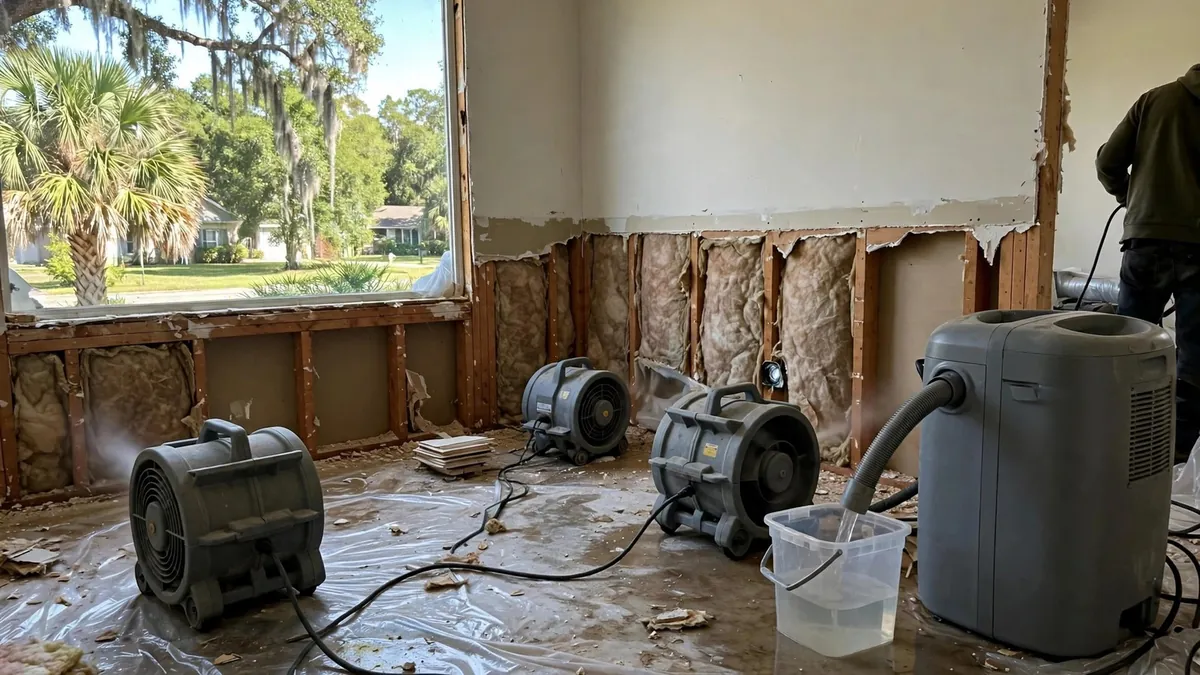
The first hour after water damage
What you do before help arrives changes the outcome.
- Stop the source. Close the main valve or the supply to the failed fixture. A plumber handles the repair.
- Stay out of rooms with electrical hazards. If water reaches outlets, appliances or the panel, do not touch them.
- Remove what you safely can. Lift furniture, rugs and valuables off wet surfaces.
- Photograph everything. Take photos and video before moving anything, for your insurer.
- Call us. Tell us the source and how long the area has been wet.
Not all water is the same: the three categories
Industry guidance, the ANSI/IICRC S500 standard for water damage restoration, sorts water by contamination level. The category decides what can be saved.
| Category | Source examples | What it means |
|---|---|---|
| Category 1 (clean) | Supply line break, sink overflow | Drying often saves materials if done quickly |
| Category 2 (gray) | Dishwasher or washing machine overflow | Some materials can be dried, others removed |
| Category 3 (black) | Sewage, river or storm flood water | Porous materials usually removed and disposed of |
Water damage in your home?
Call any hour and tell us what happened and how long the area has been wet.
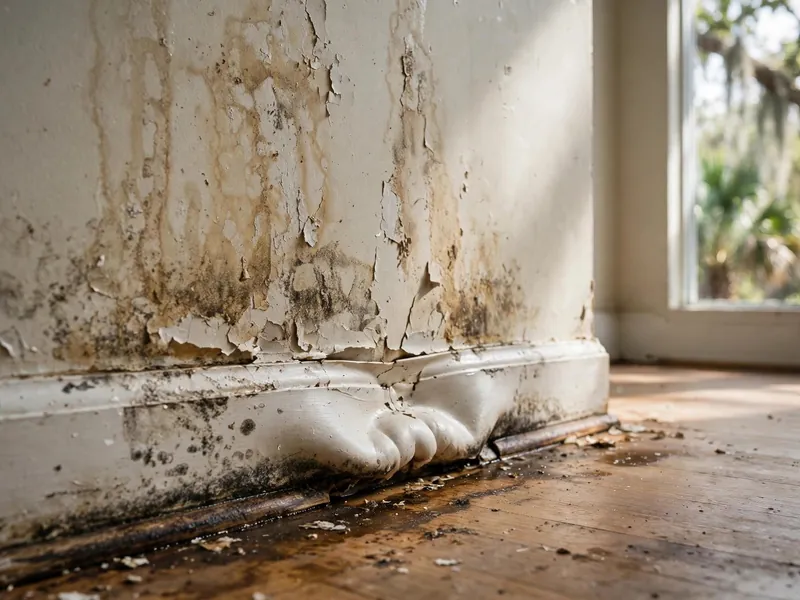 Before
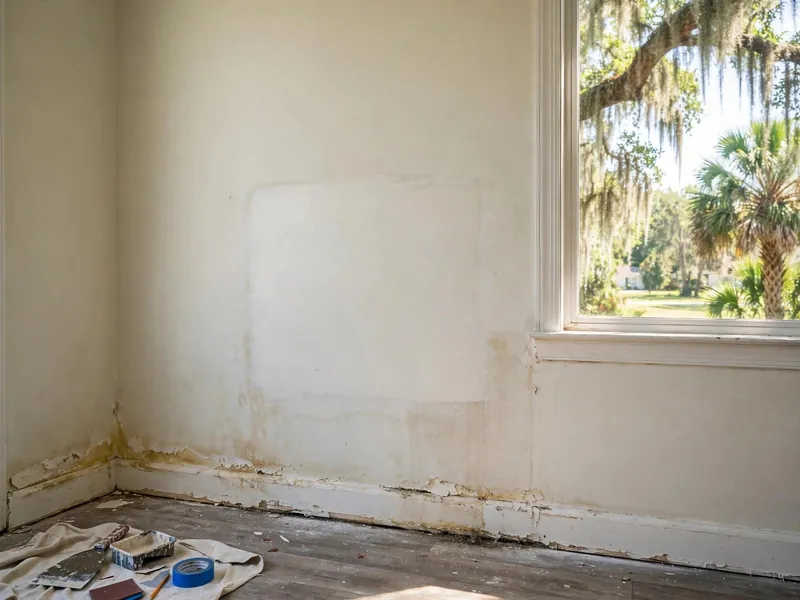 After
AfterHow restoration works
The crew assesses the area, finds the extent of moisture with meters and thermal cameras, and removes standing water. Air movers and dehumidifiers then dry the structure while readings are tracked daily until they reach normal levels.
The crew removes materials that cannot dry, such as soaked insulation or sagging drywall. Cleaning and antimicrobial treatment follow where the water type calls for it. The rebuild, new drywall, paint and flooring, comes last.
Why speed matters: the 24 to 48 hour window
EPA guidance says materials that stay wet longer than 24 to 48 hours risk mold growth. South Carolina's humid summers speed that up. We make no health claims about mold, and anyone worried about health effects should talk to a physician.
If the water came from a failed pipe, the pipe still needs repair. See burst pipe repair for that side of the job, which uses a different line from this page.
Floodwater is a different situation
During the October 2015 flood, the Columbia Canal breached, a gauge on Gills Creek in Forest Acres logged 10.64 inches of rain in four hours, and dams failed. Floodwater is Category 3 water. It carries sewage and soil, and porous materials generally cannot be saved.
If your home flooded from outside, call your insurer and a flood adjuster as well, because standard homeowners policies usually exclude flood. Our sump pump page covers prevention.
Hiring a restoration contractor: what to ask
A short set of questions protects you at a stressful time.
- Is there a written scope? It should list rooms, equipment and what will be removed.
- Will you log moisture readings? Daily logs show the drying progress and support the claim.
- How do you handle contaminated water? Category 3 losses need removal and protective gear.
- What is the payment arrangement? Large up-front payments with no scope are a red flag.
- What credentials can you show? Ask for proof of insurance and any certifications claimed.
Contents: what to save and what to discard
Photographs, hard furniture and non-porous items can often be cleaned and saved after clean-water losses. Most owners discard soft goods that sat in contaminated water, such as mattresses and upholstered furniture. Make a list with photos before disposal, because the insurer will want one.
Floods, boil advisories and who to call
During the October 2015 flood, the Columbia Canal breached and the city issued a boil advisory through Columbia Water. Standard homeowners policies in Richland County and Lexington County usually exclude flood, and the National Flood Insurance Program, which typically has a 30-day waiting period, covers it. The Gills Creek watershed and the Congaree floodplain are the highest-risk parts of the Midlands.
Water damage from storms and failed lines across the Midlands
Heavy rain and river rise reach different parts of the Midlands in different ways. Low streets beside the Congaree, the Gills Creek valley and the bottomland around Hopkins are the places where water stays longest.
In the Congaree Vista, ground-floor shops and restaurants in converted warehouses can take water from a failed supply line or sprinkler pipe, while plaster-wall houses in Shandon need slow, careful drying.
What changes the price of water damage restoration
The area, the water category and the drying time set the price of restoration.
Homeowners insurance often covers sudden water damage, such as a burst pipe, and usually excludes flood and long-term leaks. Ask your insurer before work starts, and keep photos and moisture logs.
Want your real number? Call (833) 521-1033 and mention square footage affected and water category.
Plumbing work that goes with restoration
For the first 24 hours of stabilizing a loss, our water mitigation page explains what happens and what insurers expect. A basement or crawlspace that keeps taking on water is covered under basement waterproofing.
Water damage restoration questions
Within 24 to 48 hours if possible. Longer exposure raises the risk of mold and structural damage.
Often for sudden events like a burst pipe. It usually excludes flood and slow leaks. Check your policy.
Fans alone rarely dry wall cavities and padding. Meters show what is still wet.
Mitigation is the emergency stabilization. Restoration is the complete drying and rebuild.