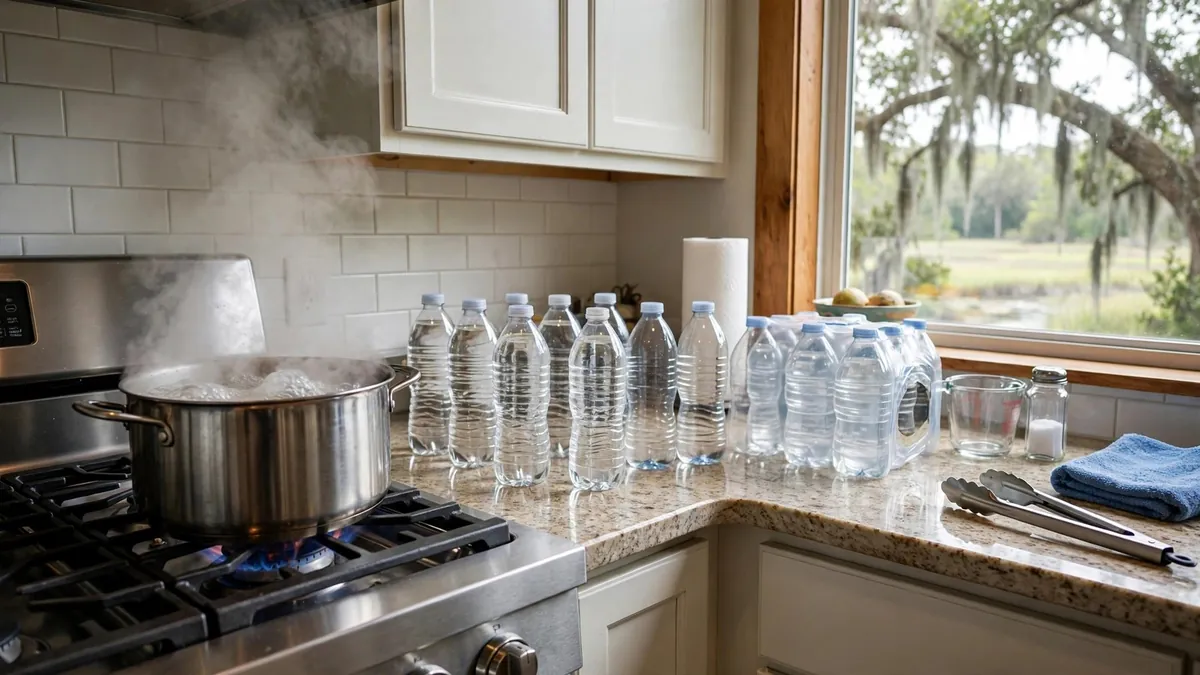
What triggers a boil advisory
In Columbia, advisories typically follow a water main break. When a main breaks, pressure drops, and low pressure can let outside water enter the pipe. The city treats that as a possible source of bacterial contamination until the Columbia Water laboratory confirms the water is safe again.
According to the city's own notices, past advisories have covered a few blocks at a time, from a six-inch break on a side street to a 12-inch main near the University of South Carolina. In October 2015, a canal breach led to a citywide advisory, which shows how far the same logic can reach.
What to do the moment you see the notice
Utility notices use similar wording each time. These are the steps they ask for.
- Boil water vigorously for at least one full minute. Start the clock after a rolling boil begins, then let it cool before using it.
- Use boiled or bottled water for drinking and cooking. That includes baby formula, coffee, soup and rinsing produce.
- Brush teeth with boiled or bottled water. Public health guidance covers this too, because people swallow some rinse water.
- Throw out ice made before the notice. Automatic ice makers are the one people forget. Discard what is in the bin and refill with safe water.
- Give pets boiled water that has cooled. They are exposed to the same risks.
- Sign up for alerts and call if you are unsure. The customer care line is (803) 545-3300, and local alert sign-ups let you see when the advisory ends.
Brown water or low pressure after a break?
Call if pressure stays low after the advisory lifts. That points to your side of the meter.
Kitchen items and what to do with each
Most of the confusion is about the small items. This table sorts them.
| Item | During the advisory | Why |
|---|---|---|
| Drinking and cooking water | Boil or use bottled | Bacteria are the concern |
| Ice from an automatic maker | Discard and do not use new batches | Ice is made from the tap supply |
| Dishwasher | Follow the notice, many call for boiled or bottled rinse water | Depends on the cycle and temperature |
| Washing hands | Use soap and safe water, boil water for rinse when instructed | Check your advisory text |
| Coffee maker and filter pitchers | Do not rely on them | Most are not rated to remove bacteria |
A filter is not a substitute for boiling
A pitcher or faucet filter is built for taste and odor, and most are not certified against bacteria. During an advisory, boil the water or buy bottled water unless the filter's label states it is rated for microbiological contaminants. If you have a whole-house system, read our guide to water filtration for what each type actually does.
Filters need attention afterward as well. A cartridge that sat in contaminated water during the event is worth replacing once the advisory ends.
When the advisory lifts: cleaning up your plumbing
After the repeal notice, run the cold taps for a few minutes to flush lines, clear the ice maker's first batches and run empty cycles through appliances that connect to water. Many utilities give specific instructions in the repeal notice, so follow those first.
Pressure drops and restores can stir up sediment. Remove the small screens at faucet aerators and washing machine hoses and rinse them. Discolored water that clears after a minute is common. If it persists, there may be a problem on your side of the meter.
Low pressure or cloudy water that does not clear
If your neighbors' pressure is back to normal and yours is not, the cause may be a stuck pressure regulator, a partially closed main valve or debris lodged in a fixture. A technician can measure pressure at a hose bib in a minute. If the meter shows movement with everything off, the main break may have damaged your service line, which water line repair covers.
Gas water heaters can collect extra sediment after a pressure event too. A rumbling heater after an advisory is a reason to book water heater repair and a flush.
Babies, older adults and people with weak immune systems
People whose bodies handle infections less well, including infants, older adults, pregnant women and those with certain medical conditions, should be especially careful during an advisory. Use boiled or bottled water for formula and let it cool before feeding. If someone in the house is ill with stomach symptoms, talk with a doctor and mention the advisory.
We make no health claims here. Follow the utility's notice and your physician's advice, and when in doubt, use bottled water.
Restaurants, salons and other businesses
Food businesses follow separate state and federal guidance during an advisory, which commonly covers ice, beverage dispensers, dishwashing and handwashing. Recent Columbia notices have told food processors and restaurants to follow the recommendations of the USDA and the state environmental agency. Managers should read the notice carefully and keep a written log of what they did.
Commercial properties with backflow assemblies or filtration should also ask a plumber to check them after a pressure event. Our page on commercial plumbing explains what that visit covers.
Prepare before the next break
A little stored water and a few habits turn a boil notice into an inconvenience.
- Store drinking water. Emergency planners suggest about a gallon per person per day for several days.
- Keep a large pot you can boil in. A stockpot with a lid works well.
- Sign up for local alerts. Utility and county alert systems send notices to your phone.
- Know your main valve. Pressure losses can send dirty water into your lines, and a closed valve limits that.
- Replace filter cartridges on schedule. A fresh set after an event beats a worn one during it.
Where advisories hit hardest
Recent notices have covered downtown blocks, the area around the university, Two Notch Road, Broad River Road and side streets in the east of the city, so no part of the system is immune. Residents of Cayce and West Columbia are on separate utilities with their own notices, so check which system serves your address.
Boil advisory questions
Until the laboratory confirms the water is safe and the utility issues a repeal notice. It can take a day or longer.
Read the text of your advisory. Many notices say bathing is acceptable if you avoid swallowing water. Babies and people with open wounds should take extra care.
Not usually, but a rumbling tank or sediment in the water suggests a flush. Follow the utility's repeal instructions first.