Commercial Plumbing in Columbia, SC
A plumbing failure in a business costs more than the repair. It closes the kitchen, shuts the restroom or stops a tenant from working.
- Restaurants and offices
- Property managers
- After-hours calls
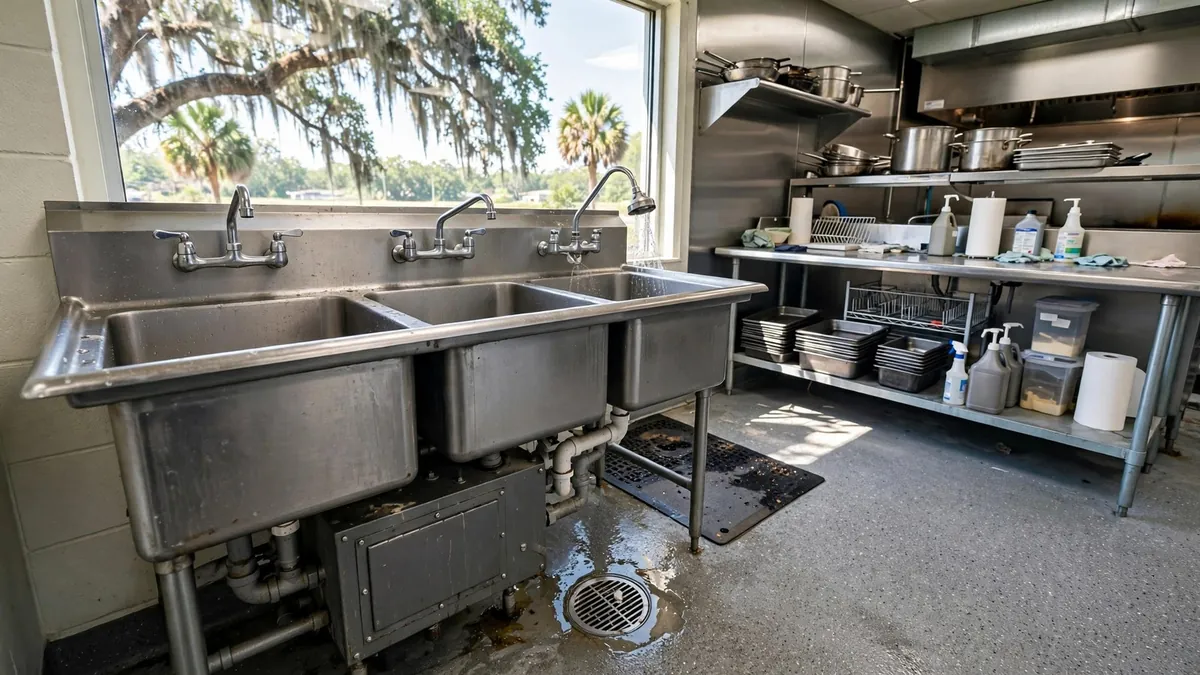
What different businesses usually need
The failures vary by type of building.
| Business | Common problems | What helps |
|---|---|---|
| Restaurant or food service | Grease clogs, floor drains, dishwasher lines | Interceptor service plus jetting |
| Office or retail | Restroom fixtures, flushometers, leaks above ceilings | Fixture parts and leak tracing |
| Multi-unit rental | Tenant clogs, water heaters, shared drain lines | Camera inspection and a repair plan |
| Medical or salon | Specialty drains and backflow assemblies | Code-compliant installs and testing |
After-hours priorities
When something fails at night, these steps limit the damage.
- Shut off the affected water. Know the zone valves and the main for the building.
- Keep the public away. Cone off wet floors and close restrooms.
- Photograph the loss. Insurers and landlords both ask for it.
- Call the plumber and the landlord or manager. Leases often set who authorizes repairs.
Business plumbing down?
Call and tell us the building type and what has stopped working.
Grease, floor drains and the utility's rules
Food businesses must manage fats, oils and grease. A grease interceptor that is not pumped on schedule sends solids into the sewer, and utilities can penalize the business. Jetting the line without servicing the interceptor only moves the problem downstream. Ask your utility about its rules, and see our hydro jetting page for line cleaning. Interceptors and floor drain traps are also covered by the International Plumbing Code (IPC) as South Carolina adopts it.
Older buildings in older districts
Parts of Columbia, such as the Five Points area and the Congaree Vista, have older commercial buildings with their own piping history. Cast iron stacks, hidden branch lines and shared walls make a camera look worthwhile before large repairs.
In West Columbia, the New Brookland blocks have mill-era buildings with similar questions. West Columbia explains its housing history, which also applies to its older storefronts.
Property managers and work orders
Managers need clear reports. Ask for the problem description, the cause, the repair and photos, so the invoice matches the work order. For multi-unit buildings, a camera inspection of the shared lines identifies which tenant's problem is actually a building problem.
Commercial properties with irrigation or fire lines often have backflow assemblies due for annual tests, covered on our backflow testing page.
What to do between emergencies: a maintenance checklist for businesses
Most commercial emergencies were visible weeks before.
- Floor drains and traps. Flush dry drains regularly so sewer gas does not enter.
- Grease interceptors. Pump on a schedule set by use, not on failure.
- Water heaters. Flush yearly and check the relief valve.
- Restroom fixtures. Replace worn flush valves and supply stops before they leak.
- Backflow assemblies. Test annually and file the report.
Flushometers, water heaters and recovery rate
Commercial restrooms often use flushometer valves, which need regular diaphragm replacement. Commercial water heaters are sized by recovery rate, how fast they reheat, not only by tank size. A restaurant or a gym needs far more hot water in a short window than an office does.
If the hot water runs out at rush hour, the unit may be undersized or sediment may have cut its output. Either problem can be checked on a service call.
Documentation commercial customers should expect
A good service invoice states the location, the cause, the repair, the parts and the time. Landlords, tenants and insurers all ask for it later. Photos before and after, and notes on anything that needs follow-up, keep arguments about responsibility short.
Commercial districts and their utilities
Older commercial buildings around Five Points and the Congaree Vista in Richland County have their own pipe histories, and restaurants there answer to Columbia Water on grease and to the South Carolina Department of Environmental Services on wastewater. Businesses along Sunset Boulevard in Lexington County deal with other utilities, so confirm yours.
Event-day demand near Williams-Brice Stadium and the Fairgrounds
Williams-Brice Stadium opened in 1934 beside the South Carolina State Fairgrounds, at George Rogers Boulevard and Bluff Road. Restaurants, hotels and shops around that corner see heavy water use on event days, and drains, grease lines and restrooms are what fail first.
Blythewood's Wilson Boulevard corridor and the Two Notch Road corridor in Northeast Columbia show the same pattern in smaller doses. A commercial emergency uses the same 24/7 line, and we ask about the building's age, its tenants and where the shutoff sits.
What changes the price of commercial plumbing
Commercial jobs vary more than residential ones.
Commercial property policies vary. Business interruption coverage may respond to a sudden failure, so keep documentation.
Want your real number? Call (844) 981-1691 and mention building size and systems and after-hours timing.
Other work commercial properties call about
A recurring clog may be a line problem, which sewer line repair covers. Restrooms with persistent leaks may need leak detection before repairs begin.
Commercial plumbing questions
Yes. Drain lines, floor drains and water heaters are common. Grease interceptor pumping is a separate service.
Yes. Call any hour and say it is a commercial property.
Yes. A camera inspection of the shared lines often saves repeated tenant calls.
Your lease decides. Landlords and managers usually authorize larger repairs.