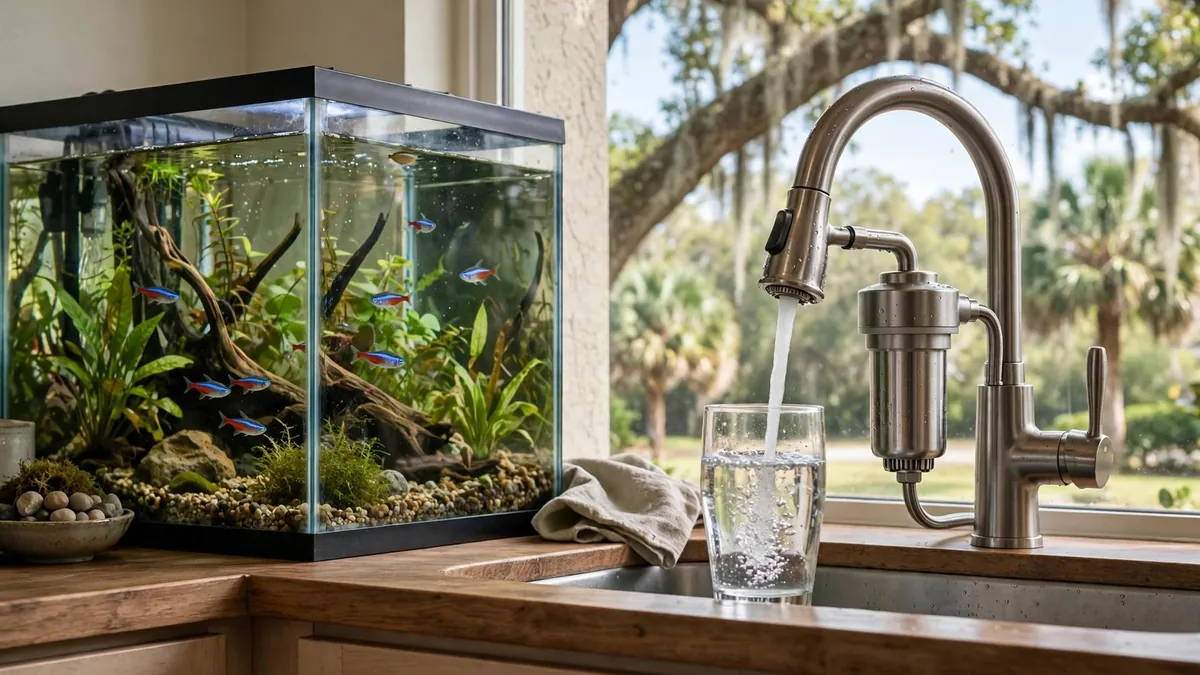
What chloramine is and why Columbia uses it
Chloramine is a disinfectant made by combining chlorine with ammonia. It lasts longer in the pipes than chlorine alone, which keeps water protected on its way to far-off taps. Columbia Water states on its website that it began using chloramine along with chlorine at the Columbia Canal plant in the mid-1960s and at the Lake Murray plant in 1982.
The city's 2017 water quality report listed chloramine levels between 1.8 and 2.8 parts per million, against a federal limit of 4. That is a normal range for treated water, and it explains the faint pool smell some people notice.
What it does to taste and smell
Chloramine rarely smells strongly itself, but it changes the way water tastes, especially warm. Hot showers can release a chlorine-like odor, and tap water can taste flat or slightly medicinal. People who move to Columbia from a city that uses plain chlorine often notice the difference first.
If you smell rotten eggs rather than pool water, the cause is different. That odor is usually from the water heater, not the disinfectant, and our page on water heater repair covers the usual fix.
Hot shower smells like a pool?
Call and tell us where the smell shows up. It may be the water, the heater or the filter.
Fish, ponds and other living things
Columbia Water warns that chloramine is toxic to aquatic life and must be removed from tap water before it goes into an aquarium or pond. That includes fish, shrimp, snails, turtles and frogs. Fish keepers use conditioners that neutralize chloramine, and the product label should say it covers chloramine, not only chlorine.
Two things that do not work are boiling and letting water stand. Chlorine escapes that way, but chloramine is stable and stays put. Home dialysis patients have a similar concern and should follow their care team's instructions.
Which treatment removes chloramine
Not every filter on a store shelf handles chloramine. Compare the methods.
| Method | Handles chloramine? | Notes |
|---|---|---|
| Basic carbon pitcher | Poorly | Fine for chlorine taste, weaker on chloramine |
| Catalytic carbon | Yes | Common choice for whole-home and under-sink filters |
| Reverse osmosis drinking system | Partly, with proper carbon stages | Used at one tap |
| Vitamin C or sodium thiosulfate | Yes | Used for aquariums and shower filters |
| Boiling or standing | No | Chloramine stays in the water |
Look for the NSF/ANSI 42 standard on the box with a stated chloramine claim, since that certification tests the reduction claim. For whole-home equipment, see our page on water filtration installation.
Rubber parts and plumbing fixtures
Chloramine can degrade some rubber and elastomer parts faster than chlorine does. Toilet flappers, supply hoses and some water heater gaskets are the usual casualties. A flapper that turns soft or sticky inside two years is a classic example.
When you replace those parts, choose chloramine-resistant versions. They cost about the same and last longer. A toilet that keeps running because of a failed flapper is a good case for our page on toilet repair.
Does chloramine matter for your health?
Chloramine is a regulated disinfectant, and the utility reports levels below the federal limit. We do not make health claims. People with specific concerns, such as pregnancy, kidney disease or a home dialysis machine, should speak with their physician and ask the utility for its latest water quality report.
Shower filters: what they can and cannot do
Shower filters that use vitamin C remove chloramine from hot water, and the effect is real. Those with catalytic carbon also work, though performance drops as hot water passes through quickly. Cartridges wear out within months, and their effectiveness fades well before you notice any change.
A shower filter helps with smell and skin comfort. It does not change what comes out of the kitchen tap, and it does not replace a whole-home system if you want to treat every outlet.
Setting up an aquarium on Columbia water
Fish keepers in the area learn this early, and it is worth getting right.
- Choose a conditioner labeled for chloramine. Products that only list chlorine leave the chloramine behind.
- Understand the ammonia. Breaking the bond in chloramine releases ammonia, which can stress fish. Some conditioners bind it.
- Treat the water before each change. Dose the new water in a bucket before it goes into the tank.
- Test ammonia regularly. A test kit confirms the conditioner is working.
- Keep the same routine for ponds. Fill and top-off water needs treatment too.
Finding disinfectant data in your water report
Every public water system publishes an annual consumer confidence report. Look for the disinfectants section, where chloramine appears with a maximum allowed level of 4 parts per million and the range the utility measured. The report is usually posted on the utility's website, and printed copies are available on request.
The numbers help you judge whether a filter makes sense. If your concern is taste, the range tells you what the filter is dealing with, and the report also shows other items such as trihalomethanes, which are byproducts of disinfection.
Is bottled water the answer?
Bottled water removes the taste question but adds cost and plastic, and it does not help your shower or your fish tank. For drinking only, an under-sink carbon filter delivers filtered water at a tiny fraction of the per-gallon price. For taste alone, a refrigerator filter or a pitcher with a published chloramine claim may be enough. For everything else, treat the water at the source.
If a boil advisory is in effect, bottled water is the safe choice, and our guide to water filtration explains why a normal filter is not a substitute.
If you live outside the city system
Not every Midlands tap runs on Columbia Water. Cayce and West Columbia operate their own utilities, and the Town of Lexington buys water from West Columbia. Each utility chooses its own disinfectant, so check the report for your address before you buy treatment equipment. If you are on a private well in a place like Irmo, the question may not apply at all.
Chloramine questions
No. Chlorine escapes with boiling, but chloramine is stable and remains in the water.
It can be, particularly with hot water. A shower filter with catalytic carbon or vitamin C reduces it.
Catalytic carbon, sized for your flow rate. Check the product's published chloramine rating.
No. A softener exchanges hardness minerals for sodium or potassium and does nothing about disinfectants. Carbon-based filtration is what treats chloramine, and many homes use both a softener and a carbon filter for different problems.