Shower & Bathtub Installation in Columbia, SC
Most shower failures come from what you cannot see: the drain connection, the valve and the waterproofing behind the tile. Good installation starts there.
- Tub and shower installs
- Valves and drains
- Tub-to-shower conversions
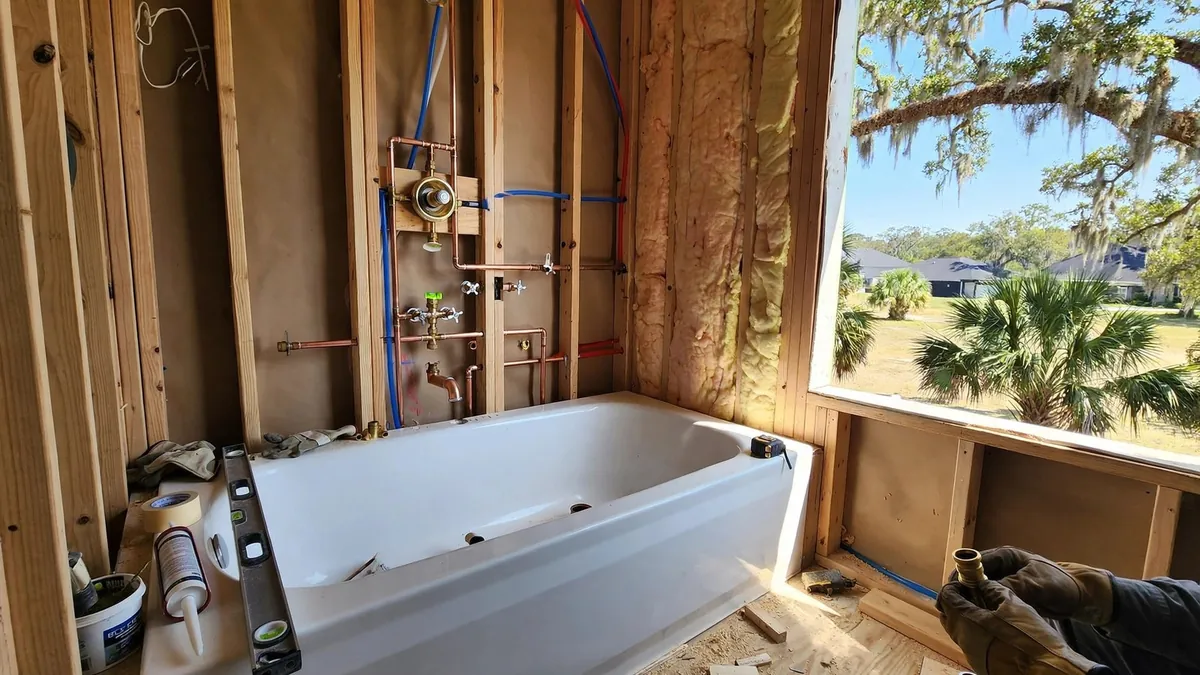
Common projects compared
The plumbing work differs a lot by project type.
| Project | Plumbing involved | Watch for |
|---|---|---|
| Replace a tub like for like | Disconnect drain and overflow, set new tub | Access to the drain and the wall behind |
| Tub-to-shower conversion | New drain location, new valve, waterproofing | Floor framing and drain height |
| Prefab shower unit | Drain and valve rough-in | Exact rough-in dimensions |
| Tiled shower | Drain, valve, waterproof membrane, slope | Membrane flooding test before tile |
The valve and the drain are the parts that matter
Showers must have a pressure-balancing or thermostatic valve under the International Plumbing Code (IPC), which South Carolina adopts with state modifications. That protects the person in the shower when someone flushes a toilet elsewhere.
The drain connects to a trap and a vent. A drain without a proper vent gurgles and drains slowly. Replacing a drain in an older house is a chance to check what is behind the wall.
Planning a bathroom upgrade?
Call and describe the project. We will tell you what the plumbing side involves.
Waterproofing is the hidden step
Tile and grout are not waterproof. A membrane behind the tile and under the pan is what keeps the shower from rotting the framing. A flood test, filling the pan and checking for leaks over a day, should happen before tile goes up.
A slow leak behind a shower is a classic hidden problem. Our leak detection page explains how those are found when the signs finally show.
What older Columbia-area bathrooms hide
Opening a wall in a mid-century house in Forest Acres often reveals galvanized supply stubs and cast iron drains. Plan for the chance that some pipe needs replacing while the wall is open, and ask about repiping before the new tile covers it.
Permits and inspections
Changing a drain location, adding fixtures or moving supply lines usually needs a permit. The inspector looks at the rough-in before walls close. Skipping this can complicate a later home sale or an insurance claim.
Tub materials compared
The material changes weight, cost and how the tub feels.
| Material | Strengths | Trade-offs |
|---|---|---|
| Acrylic | Light, warm to the touch, many shapes | Can scratch, needs good support |
| Fiberglass | Lowest cost | Thinner, can flex and crack over time |
| Enameled steel | Durable surface | Can chip and feels cold |
| Cast iron | Very durable, holds heat | Very heavy, floor support matters |
Planning for safety and accessibility
If a bathroom may need to serve someone with limited mobility, plan blocking in the walls for grab bars and consider a low-threshold or walk-in shower. Doing it during the remodel costs far less than retrofitting later.
Shower drain types and why the choice matters
The drain sets the slope of the floor and how easy the shower is to maintain.
| Drain type | How it works | Good fit |
|---|---|---|
| Center drain | Floor slopes in from all four sides | Standard tiled showers |
| Linear drain | Floor slopes one way to a long channel | Curbless and walk-in showers |
| Prefab pan drain | Built into a molded base | Quick installs with set dimensions |
Where new showers leak
The common failures are a poorly sealed drain flange, a missing membrane at the corners and a valve body that was not supported in the wall. A flood test before tile catches the drain and pan problems. For the valve, pressure testing the supply lines catches leaks before drywall goes up.
Caulk, not grout, belongs in corners and where tile meets the tub. Flexible joints move with the house and keep water out.
What to do if a new shower leaks
A small leak behind tile spreads quickly, so act early.
- Stop using the shower. Every use pushes more water into the wall or floor.
- Note where the leak shows. Water at the ceiling below points to the drain or pan, while a wet wall points to the valve or tile.
- Photograph and date the damage. Photos support a warranty claim or an insurance claim.
- Call the installer and a plumber. A flood test of the pan and a pressure test of the supply lines separate the causes.
Bathroom work, permits and older houses
The International Plumbing Code with South Carolina changes calls for a 2-inch drain on a shower and a 1.5-inch drain on a tub, and a pressure-balancing valve. Richland County and Lexington County building offices decide when a remodel needs a permit. Opening walls in a mid-century house off Forest Drive often reveals galvanized stubs, and Columbia Water is soft, so scale is rarely the issue.
Flow limits and what they mean for the valve
Federal rules cap showerheads at 2.5 gallons per minute, and WaterSense models use 2.0 or less. A shower with several body sprays can exceed that, which raises the demand on your water heater and the size of the valve. Ask the installer to match the valve to the total flow you plan to use.
Tubs and showers in historic houses and new builds
Cast iron tubs in Elmwood Park and Shandon can weigh several hundred pounds, so removal and floor support are part of the job. The drain in such a house may also be old cast iron or galvanized pipe that needs checking before a new tub goes in.
In newer homes around Blythewood and Northeast Columbia, fiberglass and acrylic units set over a slab are the usual choice and go in faster. Either way, the valve and the drain size are checked against code first.
What changes the price of a shower or tub installation
The range is wide. These factors explain it.
Insurance does not cover a remodel. It may cover water damage from a sudden failure.
Want your real number? Call (844) 981-1691 and mention project type and plumbing changes.
Other bathroom plumbing worth planning together
A shower that drains slowly may need drain cleaning before anything is replaced. A faucet or valve that leaks on its own belongs on our faucet and sink repair page.
Shower and bathtub questions
A like-for-like swap often does not. Moving the drain or valve usually does. Your building department decides.
Many take a few days, plus waterproofing and tile time.
A poor vent or a drain that lacks slope is the usual cause.
We handle the plumbing. Tile and finish work are separate trades.