Emergency Water Mitigation in Columbia, SC
Mitigation is triage. It covers extraction, containment and removal of ruined materials in the first day, so a manageable loss does not become a gutted house.
- 24/7 emergency calls
- First 24 hours
- Documentation for claims
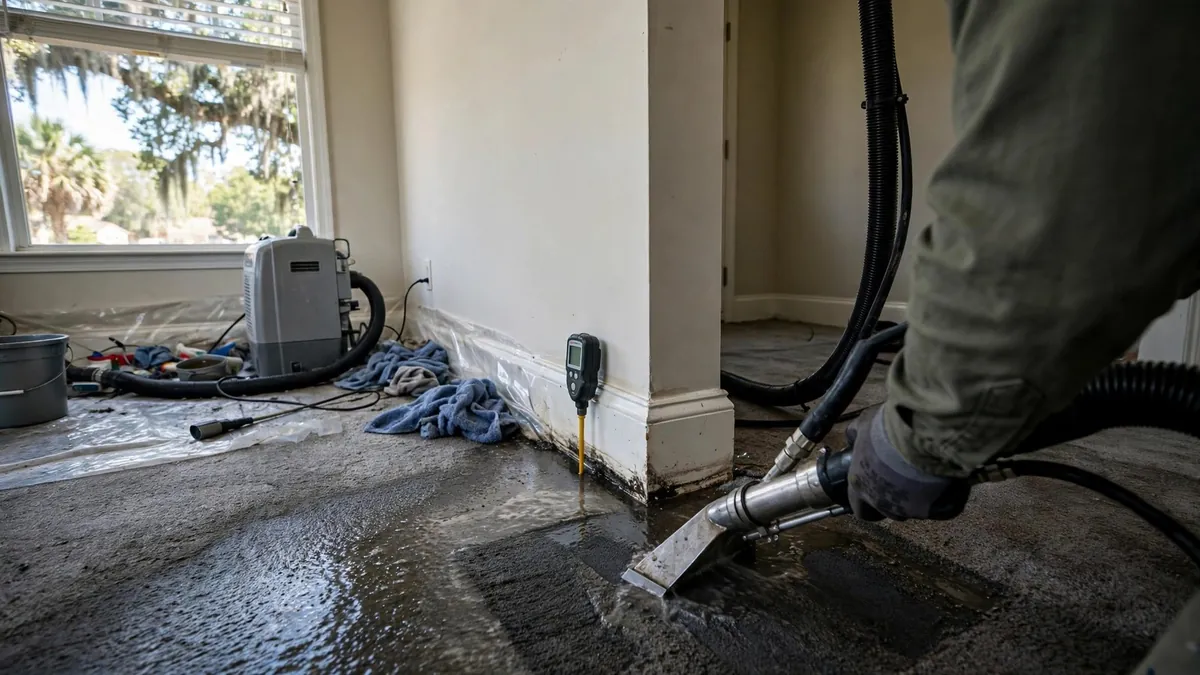
Mitigation versus restoration
Insurers and contractors use these words differently, so seeing them side by side helps.
| Mitigation | Restoration | |
|---|---|---|
| Goal | Stop and limit further damage | Return the property to normal |
| Timing | First hours to days | Days to weeks |
| Typical work | Extraction, containment, starting the drying | Full drying, repairs and rebuild |
| Insurance view | Often an expected, reasonable step | Covered according to the policy and claim |
For the full process, see our page on water damage restoration.
What happens in the first 24 hours
A mitigation visit has a clear sequence.
- Stop or confirm the source is stopped. A plumber repairs the pipe. Mitigation assumes the water has been shut off.
- Extract standing water. Pumps and wet vacuums remove what can be removed.
- Remove unsalvageable materials. Soaked insulation, carpet pad and ruined drywall come out.
- Protect contents. Furniture is moved or blocked up and valuables are packed away from wet areas.
- Begin drying. Air movers and dehumidifiers start, with moisture readings logged.
Water loss in progress?
Call any hour. The first step is stopping more damage, and we can start by phone.
Documentation insurers look for
Insurers want to see the cause, the extent and the steps taken. Photos before and after, moisture readings, equipment logs and receipts all matter. A tidy record supports the claim and speeds payment.
Do not throw out ruined belongings before they have been photographed and listed. Keep the plumber's invoice as proof of the failure, and mention it to your adjuster. Our burst pipe repair page covers the repair side.
What not to do while you wait
Do not use a household vacuum on standing water. Do not turn on a ceiling fixture below a wet ceiling. Do not walk on a sagging ceiling or wet drywall. Do not run a space heater near wet areas.
If the water is sewage or floodwater, keep children and pets away and avoid contact. Those losses are Category 3 and need extra precautions.
Why speed matters in the Midlands
South Carolina's warm, humid climate speeds mold growth, and EPA guidance says to dry wet materials within 24 to 48 hours. In October 2015 the Columbia area saw record rain, dam failures and a canal breach, and many families waited days for help. A quick start narrows the loss.
If a sump pump failed, see our sump pump page for what to fix once the water is under control.
A timeline of a typical loss
The sequence below shows where mitigation fits.
| When | What happens | Why it matters |
|---|---|---|
| Hour 0 to 2 | Stop the source, call for help, photograph | Limits the volume of water |
| Hours 2 to 24 | Extraction, removal of ruined materials, drying starts | Starts the clock on mold prevention |
| Days 1 to 3 | Drying equipment runs, readings logged | Brings materials back to normal moisture |
| After drying | Repairs and rebuild begin | This is restoration, not mitigation |
A leak from upstairs: ceilings and light fixtures
Water that comes through a ceiling can pool in the insulation above and soak the drywall. A bulging ceiling can release a lot of water at once and may collapse, so stay out from underneath and do not poke it yourself. Turn off power to that circuit from a dry location, keep the light fixture off until it has been checked, and call.
Reporting a loss in the Midlands
Call your insurer early, whether you live in Richland County or Lexington County. If the water came from the street, Columbia Water or your city utility should hear about it. Homes near the Congaree River and Gills Creek were among the most exposed in October 2015, and policies commonly expect prompt steps to limit further damage.
Stopping the spread in older and newer buildings
Mitigation starts at the source: closing the main, extracting standing water and removing wet material quickly. In plaster-wall houses in Shandon and Elmwood Park the drying plan differs from the plan for drywall houses in Blythewood and Northeast Columbia.
Moisture readings guide how long equipment runs and when a wall is dry. Ask for those readings in writing.
What changes the price of water mitigation
Mitigation is priced by the emergency work and the equipment placed.
Many policies pay for reasonable mitigation after a covered loss. Confirm with your insurer, and keep every receipt.
Want your real number? Call (833) 521-1033 and mention water volume and area affected.
Work that comes after mitigation
A pipe that keeps leaking inside a wall may need leak detection before the walls close. A slow flow of water into a crawlspace is covered under basement waterproofing.
Water mitigation questions
Mitigation limits further damage in the first hours. Restoration completes the drying and rebuild.
Many policies expect reasonable steps to prevent further damage. Read yours and ask your insurer.
Often yes. Insurers generally prefer that damage is limited early. Confirm with your adjuster.
Plumbing repair is a separate job on a different line. Our burst pipe page explains it.