Basement Waterproofing in Columbia, SC
Basement waterproofing in the Columbia area spans several trades. We cover the plumbing side of it: sump systems, interior drainage, discharge lines and the leaks that cause the moisture.
- Sump and drainage systems
- Plumbing-source leaks
- Honest scope
What a plumber does and does not do
In the Columbia market, basement waterproofing is largely sold by foundation and crawlspace specialists who also do structural foundation repair, crawlspace encapsulation and exterior excavation. Local foundation contractors describe clay-heavy soil and humid crawlspaces as the common conditions.
That work is a different trade from plumbing. We do not do structural foundation repair, vapor barrier encapsulation or exterior waterproofing membranes. We do sump pits and pumps, interior drainage that drains to a pump, discharge lines, and finding plumbing leaks that cause the water.
Where is the water coming from?
Fixing the wrong source wastes money. This table sorts the usual sources.
| Source | Typical sign | Who fixes it |
|---|---|---|
| Roof runoff and grading | Water after rain near one wall | Gutters and landscaping |
| High ground water | Damp floor after sustained rain | Drainage and sump system, plumber |
| A plumbing leak | Damp that continues in dry weather | Plumber, start with the meter test |
| Sewer backup | Sewage smell, floor drain overflow | Plumber, backwater valve |
| Crawlspace humidity | Musty air, damp insulation | Encapsulation specialist |
Water in the basement or crawlspace?
Call and describe when the water appears. After rain or all the time points to different causes.
Before you call anyone
Gathering these details speeds every diagnosis.
- Note when the water appears. After rain, or in dry weather too? That separates ground water from a leak.
- Run the meter test. If the meter moves with everything off, start with a plumbing leak. Our leak detection page explains how.
- Check gutters and downspouts. Make sure they carry water away from the wall.
- Photograph the damage and the date. Photos help every contractor and insurer.
Interior drainage and sump systems
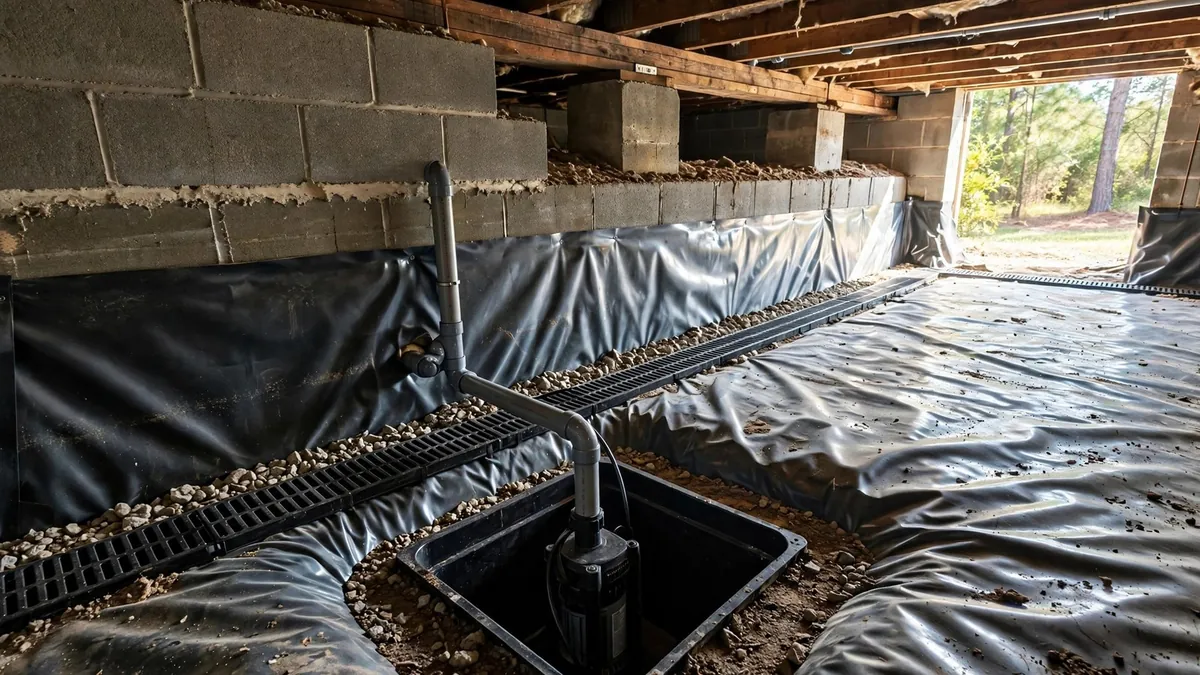
An interior drain collects water at the base of the wall or along the slab edge and carries it to a sump pit, where a pump sends it outside. It works with the house's footprint and manages water that has already reached the foundation. The pump, check valve and discharge line are plumbing work, covered on our sump pump page.
A battery backup matters. Storm outages and flood conditions often occur together.
Flood-prone parts of the Midlands
In October 2015 the Gills Creek watershed east of downtown saw dam failures and a gauge in Forest Acres logged 10.64 inches of rain in four hours. Cayce's low parts near the Congaree flood at river stages the National Weather Service lists. Basements are less common in the Midlands than in northern states, and homes that have below-grade space tend to be on sloped or lake lots.
Those conditions favor pumped drainage over any claim that a coating alone will keep water out.
Gutters, grading and what to ask a drainage contractor
Before spending on a sump system, make sure roof water leaves the property. Downspouts should discharge several feet from the foundation, and the soil should slope away from the walls. These fixes are inexpensive and sometimes solve the problem by themselves.
If you do call a foundation or drainage contractor for exterior work, ask for a written scope, ask who handles permits and ask what the warranty covers. We can coordinate the plumbing side, which is usually the pump and the discharge.
Where the discharge line is allowed to go
A sump discharge should end where the water cannot flow back toward the house, such as a splash block well away from the wall or a drainage swale. Discharge into the sanitary sewer is generally not allowed, because storm water overloads treatment systems. Your city or county sets the rules, so confirm before the line is run.
Discharging onto a neighbor's property or a public sidewalk can also create problems. A plan for where the water goes is part of every good sump installation.
Crawlspace plumbing items worth checking
Even when encapsulation is handled by someone else, plumbing in the crawlspace deserves a look. Check supply lines for sweating or leaks, drain lines for sag and support, and the water heater closet seals. Insulating exposed supply pipe protects it from cold snaps, and fixing a small drip early keeps moisture from feeding mold.
What the Midlands market looks like
Foundation and crawlspace specialists dominate this service in Richland County and Lexington County, and basements are less common here than in northern states. Your Columbia Water meter is the quickest test for a plumbing leak. Gills Creek and the Congaree River define the flood side of the story, and your own meter readings show whether a plumbing leak sits behind the damp.
Crawlspaces and low ground from Cayce to Hopkins
Basements are rare in the Midlands, so most waterproofing work means crawlspaces. Low ground along the Congaree in Cayce and West Columbia and across Lower Richland near Hopkins is where water stands under floors longest after heavy rain.
Gutter discharge, grading and a crawlspace vapor barrier usually come before any pump. Our Hopkins page explains how water behaves on that side of the county.
What changes the price of drainage and sump work
Cost depends on how much concrete is cut and how far water must travel.
Standard homeowners policies usually exclude ground water seepage. Water from a sudden plumbing failure is treated differently, so describe the cause accurately.
Want your real number? Call (844) 981-1691 and mention length of interior drain and sump pit and pump.
Plumbing jobs that sit next to waterproofing
If water has already soaked finished space, see water damage restoration. Sewage in a floor drain during storms points to backflow prevention and a backwater valve.
Basement waterproofing questions
No. Those are separate trades. We handle sump systems, interior drainage, discharge lines and plumbing leaks.
No. Many Midlands homes have no basement. Look for actual water first.
If the damp continues in dry weather or the meter moves with fixtures off, suspect a leak.
It handles water that reaches the pit. Poor grading and gutters still need fixing.